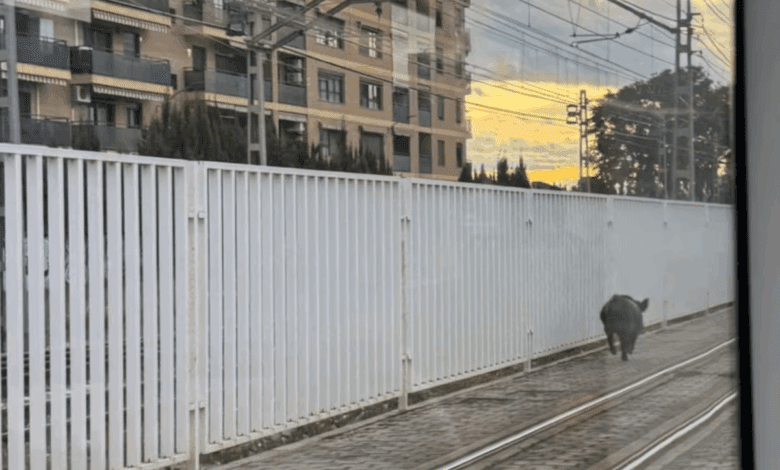
An incident involving a wild boar that entered the metro tracks near the Empalme station in Burjassot became an unexpected challenge for Valencia’s transport system. The event caused delays on two major metro lines and drew attention to the growing presence of wild animals in suburban areas.
On Thursday morning, around nine o’clock, staff from the Ferrocarrils de la Generalitat (FGV) received an alarming report: a boar had been spotted on the metro tracks. The animal entered the Empalme station area from the commercial zone and was soon seen near Campanar station, heading toward central Valencia. For the safety of passengers and employees, train service on lines 1 and 2 was temporarily halted, and sections of the route were blocked off.
Operation to capture the boar
Seprona officers—the unit of the Civil Guard specializing in nature protection—arrived at the scene. Their task was to quickly locate and neutralize the animal, preventing it from colliding with trains or passengers. At the same time, Metrovalencia management warned all operators about the potential hazard on the tracks and recommended heightened caution.
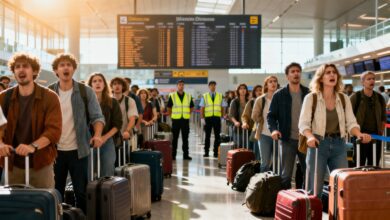
Passengers on board at that moment noticed the trains were moving much more slowly, and stops at stations and in tunnels were lasting longer than usual. Many were unsure what was happening until an official announcement sounded over the loudspeaker: delays had been caused by a wild animal on the tracks. The increased presence of security staff at Beniferri and Campanar stations only heightened passengers’ alarm.
Service restoration
After several tense minutes during which the wild boar ran through the tunnels, train traffic was completely halted on two lines. This allowed specialists to focus on locating and capturing the animal, minimizing the risk of accidents. Once the situation was under control, trains gradually began returning to their regular schedule, starting with the section after Túria station.
Passengers noted that after service resumed, trains ran without further delays and metro staff remained vigilant in case the animal reappeared. For many, the incident raised concerns about transportation safety and the vulnerability of urban systems to sudden wildlife intrusions.
Measures against invasions
The wild boar incident has once again raised the issue of controlling the population of wild animals in the suburbs of Valencia. Regional authorities reminded that efforts to combat the growing wild boar population have been underway for several years. Recently, the Valencian parliament approved a special decree introducing urgent measures to reduce their numbers, including the installation of traps and the use of camera traps to monitor the situation.
Special attention is being paid to areas where wild boars are increasingly appearing near residential and commercial zones. In particular, new measures are already being implemented in the municipality of Burjassot and the surrounding l’Horta area. These actions aim not only to prevent such incidents but also to protect farmland and stop the spread of African swine fever.
Similar incidents
In recent years, sightings of wild animals in Spanish cities have become more frequent. Wild boars are increasingly venturing into residential neighborhoods, especially in Catalonia and Valencia, where urban areas closely border natural zones. In Barcelona and its suburbs, there have been repeated reports of boars entering roads, parks, and even school grounds. In some cases, the animals have caused traffic accidents or damaged city infrastructure.
The problem is aggravated by the fact that wild boars quickly adapt to life near humans, finding food in trash containers and showing no fear of city noise. Authorities in various regions of Spain are being forced to develop comprehensive programs to control their population and to inform the public about safety guidelines when encountering wild animals. Despite these measures, experts note that it has not yet been possible to completely eliminate such incidents.
A recent incident in Valencia served as another reminder that urban environments and nature increasingly overlap, making safety issues require constant attention and new solutions.
In the context of transport problems, it’s worth recalling that not long ago Catalonia faced a major transportation breakdown: rail services were disrupted, and buses could not cope with the passenger flow. Regional authorities were also forced to take emergency measures to restore transport operations and ensure residents’ safety. You can learn more about the causes and consequences of this crisis in our report on the transport collapse in Catalonia.