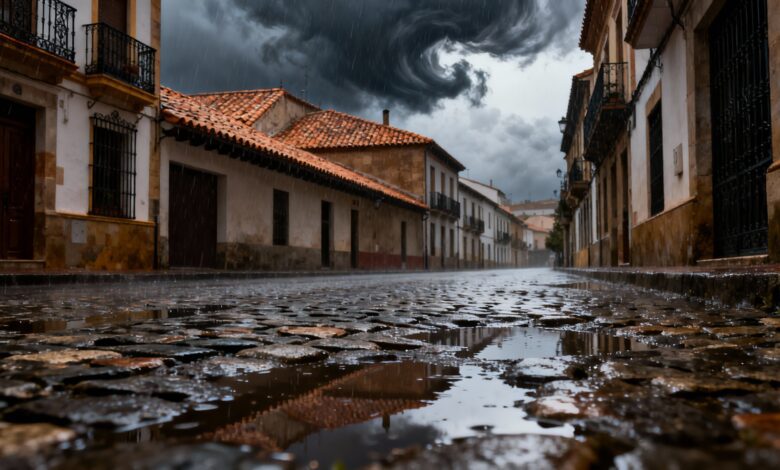
Residents of Cádiz, Huelva, and Sevilla awoke today with a sense of unease: the air outside is damp, the sky is overcast, and tension hangs heavy. Authorities have issued a yellow weather alert—this is no mere formality. In the coming hours, these provinces will be hit by torrential downpours that could in minutes turn city streets into raging streams. Meteorologists warn that rainfall may reach up to 15 liters per square meter per hour, and possibly even more.
If it were only rain, there’d be little cause for alarm. But this time, there’s another threat alongside the usual winter precipitation—waterspouts. While not uncommon for the coastal areas of Cádiz and Huelva, these phenomena still make even the calmest residents uneasy each time they appear. Sudden, funnel-spinning winds can strike without warning, and the aftermath is always unpredictable.
A harsh reality
In Sevilla, where winters are usually mild, this week brings not only rain but a noticeable cold snap. Temperatures will drop below regional norms, and heavy humidity will make the atmosphere feel even heavier. Locals are already debating on social media whether it’s worth venturing outside unless necessary, and sharing tips on how to protect cars from potential flooding.
In Cádiz and Huelva, the situation is even more challenging. Along the coast, heavy rains may be accompanied by gale-force winds, with a particularly high risk of waterspouts during the morning and daytime hours. Local fishermen and owners of small boats have been warned: today is not the best day to head out to sea. Even seasoned sailors prefer to wait out the bad weather on shore.
Hours of heightened alert
Meteorologists warn that the most dangerous periods will be in the morning and during the day, when the likelihood of heavy rainfall and waterspouts is highest. Authorities advise residents to stay extra cautious, avoid parking in low-lying areas, and steer clear of walking along the waterfront. Temporary shelters have already been prepared in some neighborhoods in case an emergency evacuation is needed.
Still, not everyone is taking the warnings seriously. Some dismiss the latest “yellow alert” as needless panic, while others stock up on candles and water in case of possible power outages. But past experience shows that it’s better to be cautious than to later regret being careless.
Consequences and expectations
Forecasters do not rule out the possibility that the downpours could lead to local flooding, especially in areas with outdated stormwater systems. Last year, similar rains brought traffic to a standstill on several streets in Sevilla and Cádiz, while in Huelva, some homes were cut off from the outside world. Municipal services are now working in emergency mode, but no one can guarantee that nature won’t spring any surprises.
Still, for locals, such weather catastrophes aren’t a reason to lose heart. Spaniards know how to joke even in the toughest situations. Social networks are already buzzing with memes about the “rainy season” and jokes about umbrellas breaking with the very first gust of wind. Yet behind this humor lies real anxiety: no one wants a repeat of last year’s floods.
Looking Ahead
For now, all that remains is to wait and watch how things unfold. The weather in Andalucía has always been unpredictable, but in recent years, nature’s surprises have become more frequent. Perhaps this is yet another sign that the climate is changing, and we will have to get used to such events. In the meantime, umbrellas are at the ready, phones are charged, and everyone is hoping the skies over Cádiz, Huelva, and Sevilla will clear soon.