The Spanish monarchs’ state visit to Egypt was under intense scrutiny from the outset. However, recent developments on the international stage—particularly the escalation of the Palestinian-Israeli conflict—have lent this trip a distinctly dramatic undertone. Against the backdrop of protests that disrupted the Vuelta cycling race and Spain’s withdrawal from Eurovision due to the situation in Gaza, every move made by the royal couple in Cairo, a city bordering Palestine, was examined with the utmost attention.
Originally, the trip was planned as a protocol event aimed at “strengthening deep historical, political, and cultural ties,” according to official communiqués. But harsh realities brought changes. King Felipe and Queen Letizia had to swiftly adapt the tone of their visit, demonstrating remarkable unity and sensitivity to public sentiment. Once again, they acted as a fine tuning fork, resonating with the broader sense of pain and concern.
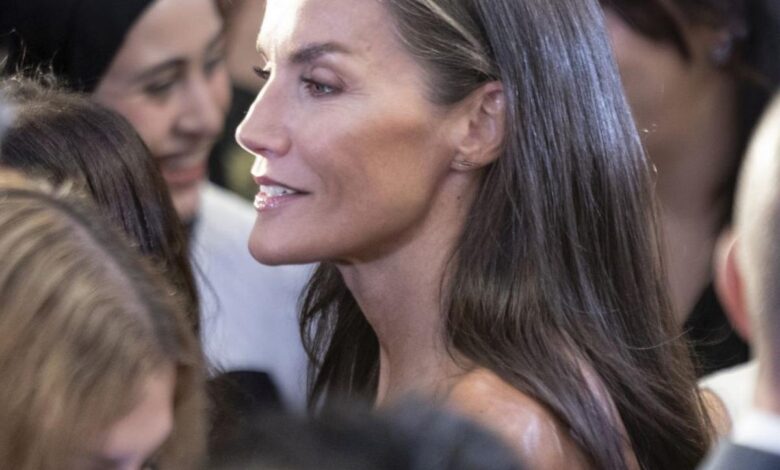
Queen Letizia’s facial expression is often reserved, but as she appeared at The St. Regis Cairo before even greeting the guests, there was not a trace of a smile. Along with her usual seriousness, a notable austerity emphasized the gravity of the moment without words. For anyone still unsure of the message, her choice of attire—a strict black dress—made everything clear. This gesture visually reinforced the words her husband would later deliver.
It was in this luxurious five-star hotel, located in the administrative heart of Cairo, that a reception was held for three hundred Spanish citizens residing in Egypt. The meeting with compatriots, understandably concerned about the escalating tensions in the region, became a key event of the first day. Addressing them, Felipe VI found words full of empathy and support.
The monarch directly addressed the tragedy in the Gaza Strip. He noted that the visit was taking place at an extremely troubled and tragic time for the region. Together with the Queen, he expressed understanding of the uncertainty caused by the unstable environment and conveyed words of support from himself and all Spaniards. Felipe VI emphasized that Spain and Egypt share a common and firm commitment to peaceful coexistence, dialogue, and reconciliation in the Middle East. In his view, this is the only path to stability and the dignified development of peoples.
The King acknowledged that this goal might seem utopian right now, but insisted it must remain achievable, and that everyone has a duty to contribute to it. He recalled that the latest outbreak of conflict, sparked by a brutal terrorist attack on Israel nearly two years ago, has cast a long shadow. The response led to countless casualties, an unbearable humanitarian crisis, unimaginable suffering for hundreds of thousands of innocent people, and the total devastation of Gaza. All the while, Queen Letizia stood by his side with an inscrutable expression.
Fortunately, after the official part concluded, the tension eased. The monarchs were able to mingle with guests in a more relaxed setting, and smiles finally appeared on their faces. The Spanish diaspora in Egypt numbers about a thousand people, notably including archaeologists. Dozens of scholars coordinate 14 Spanish archaeological missions, which annually involve more than a hundred specialists.
In addition to scholars, Felipe and Letizia also met with Spanish diplomats, Cervantes Institute staff, and representatives of non-governmental and international organizations such as the IMF, UNESCO, the World Bank, and UNHCR. The royal court photographer captured a particularly touching moment: King Felipe gently holding the hands of an elderly nun, who looked at him with undisguised delight.
The visit program will continue the following day with an official welcome ceremony at Al-Ittihadiya Palace. There, after greetings from President Abdel Fattah el-Sisi of Egypt and his wife, a luncheon will be held in honor of the distinguished guests. However, no formal dinner is planned, as this does not align with the hosting side’s protocol traditions.