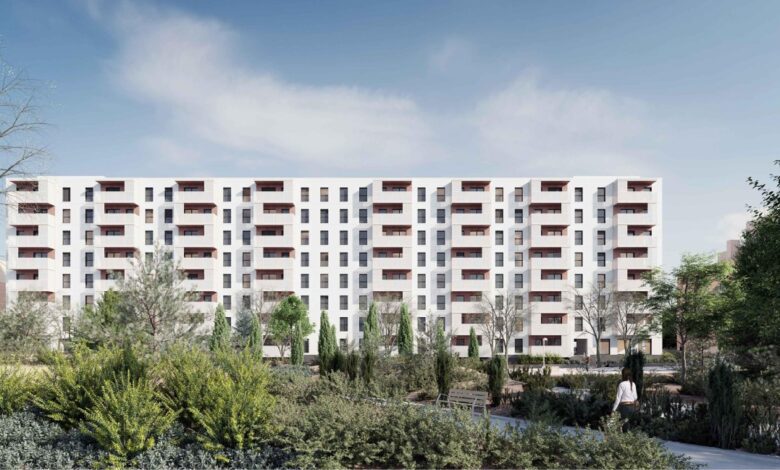
One of the most ambitious housing projects in recent years is launching in Spain’s capital region. Developer Avintia has secured the rights to build 859 rental apartments after winning three lots in a major tender organized by the government of the Comunidad de Madrid. The new properties will be built in Alcobendas and Loeches, where demand for affordable housing has long outpaced supply. The project aims not just to expand the housing stock but to transform construction methods: all buildings will use industrial technology, speeding up completion times and reducing costs.
In total, Madrid authorities planned to allocate more than 3,400 apartments across ten municipalities, including the capital, Tres Cantos, Móstoles, and Valdemoro. The competition proved fierce: over 60 bids from leading market players were submitted for 14 lots. However, Avintia managed to secure three key sites — two in Alcobendas (Arroyo de la Vega and Espino del Cuquillo districts) and one in Loeches. Modern residential complexes will be built in these areas, designed for families with varied income levels.
Industrialization of construction
The main feature of the new project is the use of the ávita system, which Avintia promotes as a technological breakthrough in construction. According to the company, this method allows homes to be built and delivered a third faster, while cutting construction waste by almost four times. Water and raw materials are used more efficiently, and noise levels and CO2 emissions are reduced by nearly half. This approach not only speeds up the process but also minimizes the negative impact on the environment and local residents.
As environmental standards become stricter and energy efficiency requirements rise, such innovations could set a new benchmark for the Spanish real estate market. Avintia claims its technology enables not just faster construction, but the creation of safer, more comfortable homes. As a result, everyone benefits: tenants get quality housing, while municipalities gain new developments without extra strain on infrastructure.
Rental Market: New Regulations
Avintia’s win in the tender strengthens its position in the build-to-rent (BTR) sector, which has experienced a real boom in recent years. The developer’s portfolio already includes nearly 6,000 apartments at various stages of completion, and that figure is still rising. Madrid’s authorities are betting on public-private partnerships to curb rent increases and improve access to housing for young families and vulnerable groups.
Experts note that such projects have the potential to shift the balance of power in the rental market. The widespread emergence of new apartments built to modern standards may drive prices down and boost competition among landlords. However, not everyone is convinced this will be enough: demand for affordable housing in the region still outpaces supply, and construction often struggles to keep up with population growth.
Urban Transformation
Alcobendas and Loeches were not chosen by chance for this project. Both municipalities are rapidly developing, attracting new investments and residents. In recent years, there has been an influx of young professionals and families seeking reasonably priced homes. These new complexes are expected to serve not only as residential spaces but also as engines of urban growth: new jobs will be created, infrastructure will improve, and overall quality of life in these areas will rise significantly.
Nonetheless, there are skeptics. Some market players worry that industrialized construction could erode individuality and architectural diversity. Others, on the contrary, believe that large-scale adoption of new technologies is the only way to resolve the housing crisis in Spain’s major cities.
The Future of Affordable Housing
Avintia’s plans to expand its portfolio of BTR projects reflect the company’s long-term strategy. In the coming years, the developer intends to continue collaborating with regional authorities and invest in the development of industrial construction methods. If the experiment proves successful, similar projects may emerge in other regions of the country.
For now, the market’s attention is focused on Madrid, where a key question is at stake: will the industrialization of construction become the new trend or remain a niche phenomenon? One thing is clear—the race for affordable housing is just beginning, and the stakes are rising each year.
RUSSPAIN recalls that Avintia Inmobiliaria is one of the largest developers in Spain, specializing in residential and commercial real estate. The company actively implements innovative technologies and participates in large-scale government programs to promote affordable housing. Avintia’s portfolio includes thousands of completed and ongoing projects across the country, as well as developments in sustainable construction and energy efficiency.