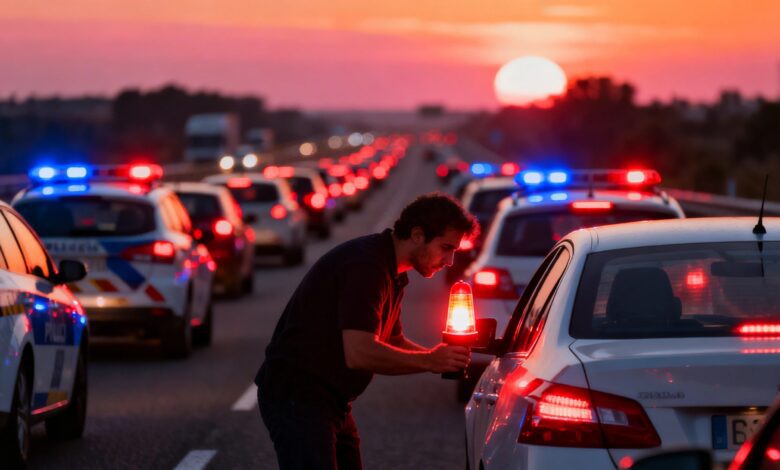
This year, Easter in Spain will be a true test for millions of drivers: from March 25 to April 6, the country expects a record number of trips, along with new rules and enhanced safety measures. For Spaniards, this means not only spending more time on the road, but also adapting to updated regulations that could affect their usual routes and plans.
The main innovation is the mandatory V-16 emergency signaling device for every vehicle. Now, in the event of any forced stop on the road, drivers must use this beacon, which not only emits a flashing light but also sends an incident alert to digital systems. The measure aims to reduce accidents and increase awareness among other road users, especially during periods of heavy travel.
Two stages and new technologies
The traffic control operation is divided into two phases. The first begins on Friday and covers the initial weekend, when over 4 million trips are expected. The second, more intense phase, starts on April 1 and lasts until the end of the holiday period. During these days, Spain’s roads will be under special monitoring: all units of the traffic police and emergency services will be deployed, along with modern technology—from mobile and fixed speed cameras to devices that detect seatbelt use and drivers using mobile phones.
Particular attention is given to regions where April 6 is a public holiday: the Balearic Islands, Castilla-La Mancha, Catalonia, País Vasco, La Rioja, Navarra, and the Valencian Community. These areas are expected to see the heaviest traffic flow, and authorities will introduce additional reversible lanes, temporary restrictions for trucks, and roadwork suspensions in these zones.
Safety and information
According to RUSSPAIN, last year’s Easter road campaign ended in tragedy for 27 people, including eight motorcyclists. This year, authorities are focusing on prevention: drivers are advised to plan safe routes in advance and stay updated on road conditions via the official X accounts @informacionDGT and @DGTes, as well as on radio and TV. You can now get information on traffic jams and incidents using the upgraded 011 hotline, which, thanks to artificial intelligence, recognizes more towns and common queries, and identifies new types of incidents such as fires and floods.
Since the start of the year, the DGT 3.0 system has logged around 2,700 daily reports of road incidents submitted via V-16 devices. This enables quicker response to accidents and helps alert other drivers to possible dangers on the route.
Restrictions and alternatives
To reduce the risk of traffic jams and accidents on the busiest sections, sports events and large gatherings that could disrupt traffic will be temporarily suspended. Truck drivers will have to follow special restrictions to avoid interfering with the main traffic flow. Additionally, road services have prepared alternative routes to relieve pressure on key highways and minimize delays.
In recent years, Spain has seen a rise in road incidents during periods of high travel. For example, in the summer of 2025, a similar operation introduced new digital services for drivers and tightened road controls. At that time, the use of mobile apps to monitor traffic and accidents helped reduce the number of serious incidents by 12%. In 2024, according to RUSSPAIN.COM, special attention was paid to motorcycle safety and the introduction of new road marking standards. These measures are gradually changing driving culture and making the country’s roads safer, though challenges remain significant.