In the foundry industry, the precision and quality of components directly depend on how materials behave at high temperatures. This is especially true for photopolymers—plastics that harden under ultraviolet light and are widely used in 3D printing. They are employed to create intricate shapes that are impossible to achieve with traditional methods. However, when heated, photopolymers behave unpredictably: they expand, exerting pressure on ceramic shells, which often leads to cracks and defective parts.
Russian engineers have proposed a solution to this problem by developing a unique computer model that can accurately predict how a photopolymer will behave when heated. The new software has already demonstrated a 97% match with real-world experiments, paving the way for a significant reduction in defective products in casting production.
Cracking issue: Why photopolymers pose a risk to casting molds
Photopolymers are used in a wide range of fields—from medicine to aviation. They’re utilized for making surgical templates, jewelry models, and, most importantly, for creating complex metal parts using investment casting. The technology is straightforward: first, a precise replica of the part is 3D printed from photopolymer; then it’s coated with ceramic to form a robust shell. Afterward, the mold is heated so the plastic burns out, leaving a cavity for molten metal.
However, the main challenges arise during the heating stage. The photopolymer expands, and if the temperature increases too quickly, the pressure on the ceramic walls becomes critical. As a result, the shell may crack, with defects often going unnoticed until the metal is poured. When the melt seeps into microcracks, the finished part comes out flawed and has to be rejected.
How the new model works: precise calculations instead of guesswork
Until recently, engineers relied on simplified models that did not account for all the characteristics of photopolymers under varying temperatures. In reality, the material exhibits both elastic and viscous properties, and these parameters change as it heats up. Existing software could not accurately predict when and where dangerous stress would occur.
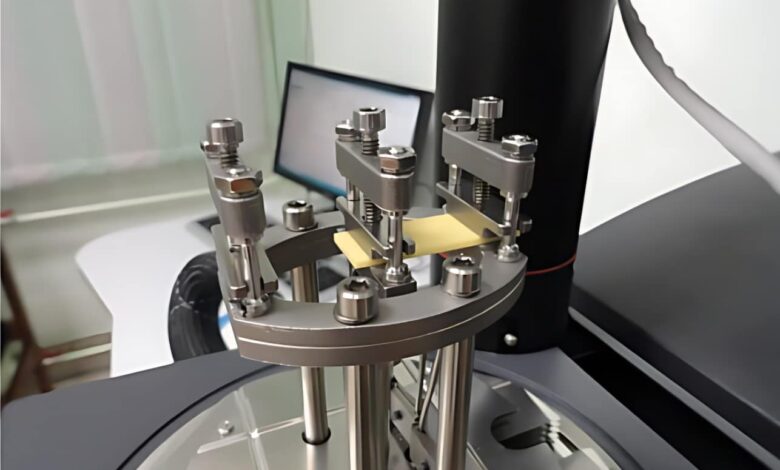
Researchers from Perm Polytechnic University (PNIPU) conducted a series of experiments using a dynamic mechanical analyzer. They heated photopolymer samples while recording changes in stiffness, elasticity, and viscosity at each stage. Special attention was given to the temperature range between 50°C and 100°C, where the material still retains its shape but is already starting to expand actively.
The collected data formed the basis of a new mathematical model. The program analyzes how the photopolymer’s behavior changes when heated and generates a stress map inside the mold. This makes it possible to identify potential crack sites in advance and adjust the process—for example, by slowing down heating in critical zones or reinforcing the shell.
Experiments and Results: Real-World Accuracy
To verify the model, engineers used a dilatometer—a device that measures thermal expansion of materials with high precision. It was found that when heated by each 10°C, the photopolymer lengthens by 0.01–0.02 mm per centimeter. For a 30 cm component, this means an increase of 4–8 mm at 150°C. Such expansion is exactly what causes ceramic molds to fail.
Virtual tests conducted with the new software were fully confirmed in actual production. When creating casting molds for turbine blades, the model predicted stress points and potential defects with 97% accuracy. This enabled engineers to adjust processes in advance and prevent defects.
Impact on the Industry: New Opportunities for Manufacturing
The implementation of this digital model opens new horizons for foundry production. Engineers can now not only design parts that account for the specific properties of photopolymers, but also optimize heating processes to reduce the risk of cracks. This is especially crucial for the aviation and medical industries, where quality requirements are at their highest.
Additionally, the new technology helps conserve resources: fewer defective products mean reduced material and time costs. In the future, such models could be integrated into standard design software, making the process of creating complex parts even more reliable and predictable.
By the way: Perm Polytechnic and its contribution to science
Perm National Research Polytechnic University (PNRPU) is one of Russia’s leading technical universities, founded in 1953. Over the decades, the university has become a hub for advanced research in materials science, mechanical engineering, and digital modeling. Major scientific projects are carried out here, including under the ‘Priority 2030’ program aimed at developing strategic technologies. PNRPU employs renowned specialists such as Professor Oleg Smetannikov and engineer Gleb Ilyinykh, who have made significant contributions to the development of new methods for material analysis. The university actively collaborates with industrial enterprises, implementing innovative solutions into real-world production. Thanks to these initiatives, PNRPU is strengthening Russia’s position in the global market for high-tech innovations.