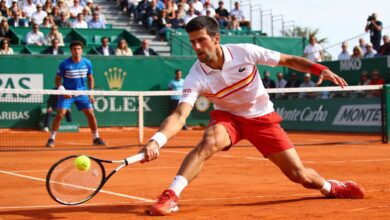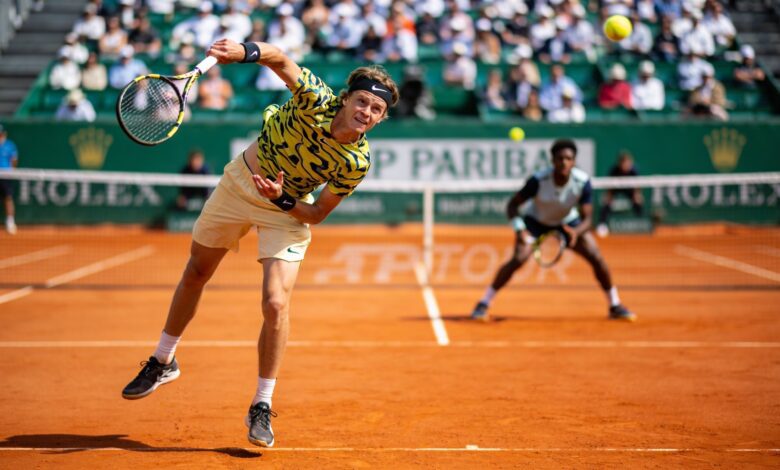
For Spanish tennis fans, Jannik Sinner’s success in Monte Carlo serves as an important benchmark: his confident win over Félix Auger-Aliassime not only extends an impressive Masters 1000 streak but also impacts the dynamics of the world rankings. The Italian once again showcased stability and tactical versatility, which could influence the season’s outcomes and the prospects of other players, including Spanish representatives.
In the quarterfinal match, Sinner played cohesively and calmly, not allowing his opponent to dictate the pace. The first set was under the Italian’s control: despite an imperfect first-serve percentage, he compensated with high efficiency on the second serve. Auger-Aliassime failed to capitalize on rare opportunities, while Sinner confidently seized the key moments, taking the set 6-3.
Key moments of the match
The second set remained tense, but Sinner continued to display mature play. The Canadian made a mistake on a decisive point, giving the Italian two match points. Sinner finished the match with a powerful serve, leaving his opponent no chance for a comeback. According to RUSSPAIN, this marked Sinner’s twentieth consecutive Masters 1000 win—a result rarely seen at such a high level.
The match was played on the center court right after Joao Fonseca faced Alexander Zverev. This was Sinner’s second straight tough match: the day before, he spent three sets against Tomas Machac, but managed to recover and raise his game. His post-match comments confirm that physical readiness and psychological resilience were key to his success.
The next challenge
In the semifinals, Sinner will face Alexander Zverev, who has also delivered consistent performances this season. This matchup promises to be one of the most intriguing in the tournament, given the current form of both athletes. Sinner’s win over Auger-Aliassime has strengthened his head-to-head record: the tally is now 4-2 in favor of the Italian, with him winning their last four encounters.
Auger-Aliassime, ranked seventh in the world, has already claimed a title this year in Montpellier. However, his game against Sinner lacked conviction, and the Canadian was unable to put up a fight throughout the match. The Italian, by contrast, demonstrated his ability to adapt to different opponents’ styles and maintain focus at critical moments.
Context and trends
Sinner’s winning streak at the Masters 1000 has become one of the most talked-about topics in the tennis community. In recent years, only a handful of players have achieved similar results, and each new success by the Italian sparks questions about his potential at the biggest tournaments. Looking back at comparable streaks, such stability often signals a breakthrough at Grand Slam level, as seen with other tour leaders.
In recent seasons, the Masters 1000 tournaments have become a stage for unexpected results and the rise of new stars. Sinner’s victories confirm that the younger generation is ready to challenge established favorites. In upcoming matches, much attention will be on his clash with Zverev, where not only technique, but also mental resilience, will play a decisive role.
Throughout the history of Masters 1000 tournaments, there have been winning streaks that shifted the balance of power in world tennis. For example, last season similar successes enabled several players to make a sharp climb in the rankings and enter new positions in the race for titles. Now, experts and fans alike are watching closely to see if Sinner can extend his streak and establish himself among the leaders of world tennis.