Features of DLSS implementation in Nintendo Switch 2
The second version of Nintendo’s popular gaming console has received an updated image scaling system. At its core lies DLSS technology, which has become a key element of the device’s architecture. Thanks to this, a noticeable improvement in visuals has been achieved while maintaining high performance.
However, the DLSS technology used in Switch 2 differs from similar solutions employed on personal computers. Analysts note that the company has implemented two versions of this system, each designed for specific usage scenarios.
Two approaches to DLSS: quality vs speed
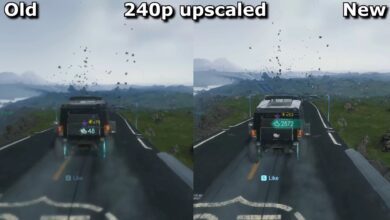
The first type of DLSS in Switch 2 is based on convolutional neural networks (CNN). It provides smoothing of moving objects and seamless transitions when changing viewpoints. This approach produces visuals that closely resemble what can be seen on a PC. The main aim of this version is upscaling to 1080p resolution, focusing on detail and minimizing artifacts. However, this high quality comes at the cost of reduced performance, so this mode is only used when maximum clarity is required.
The second type of DLSS also uses CNNs, but it is designed with a focus on speed. In this mode, there is no temporal anti-aliasing between frames, and pixel processing is less refined. This approach allows for upscaling up to 4K resolution while keeping system load significantly lower. Frame processing time in this mode ranges from 1.5 milliseconds at 1080p to 9 milliseconds at 4K, which is about twice as fast compared to the first type.
Impact on gameplay and performance
The division of DLSS into two types is due to the need to balance image quality and processing speed. The first option is intended for situations where maximum detail is important, such as playing in handheld mode or on smaller screens. The second type is used when connected to a TV or high-resolution monitor, where maintaining a stable frame rate becomes the priority.
To achieve 60 frames per second, each frame must be processed within 16.67 milliseconds. If the target is 30 frames, the limit increases to 33.33 milliseconds. Using the lightweight version of DLSS enables the Switch 2 to maintain high performance even when upscaling to 4K, which is especially important for modern games with rich graphics.
Thus, the new Nintendo console demonstrates a flexible approach to utilizing modern image processing technologies. With two DLSS options available, users can choose between maximum quality and optimal speed, depending on their preferences and how they use the device.