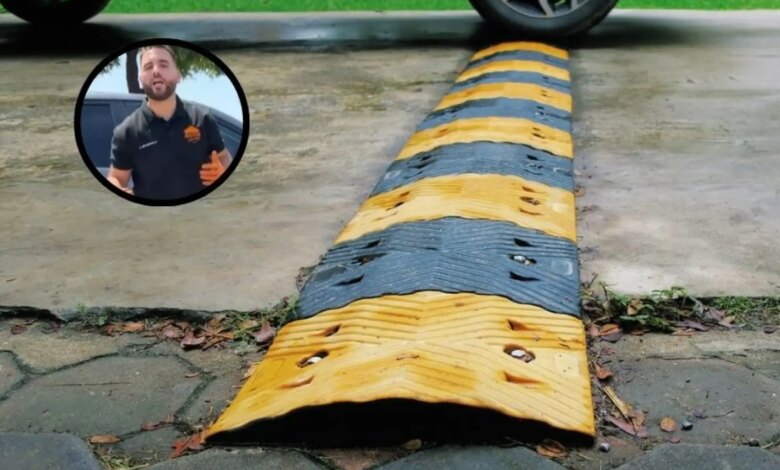
In Spain, many drivers regularly encounter speed bumps placed at entrances and exits of populated areas, as well as near important sites. Their main purpose is to force vehicles to slow down, ensuring road safety.
A mechanic known on social media points out that if a driver slows down smoothly before the bump and then gradually accelerates, the car is unlikely to experience serious issues. Modern suspensions are designed for continuous operation, as even regular driving puts them under stress from acceleration and braking.
When passing over such obstacles, the main load falls on the suspension—it compresses and extends at the moment of contact. If the driver proceeds carefully, the car’s components won’t suffer excessive wear. However, some designs may hit the underbody, which can truly cause damage.
Most standard plastic speed bumps, bolted down, comply with established regulations and are not hazardous if crossed properly. Experts recommend avoiding sudden braking and acceleration to prevent unnecessary stress on the mechanisms.
If a driver notices an obstacle that, in their opinion, does not meet the requirements, they can file a complaint with the local administration. It is also possible to submit an application to the Directorate General of Traffic, attaching photo or video evidence of the violation. In cases where the installation of the obstacle could cause an accident or is against the law, the matter is referred to the traffic safety prosecutor’s office.