Croatian Family Turns Abandoned Land into Olive Grove — and Wins Global Competition. In Dalmatia, the Nikolic family restored an old farm, planted a thousand olive trees, and harvests them by hand. Their oil received a prestigious award in New York, and their approach has become an example for the region.
In April 2026, the family farm OPG Nikolic from Dalmatia received one of the most prestigious olive oil awards in the world—gold at the New York International Olive Oil Competition (NYIOOC). Behind this success stands not only rare perseverance, but also a return to manual labor where most have long since switched to machinery.
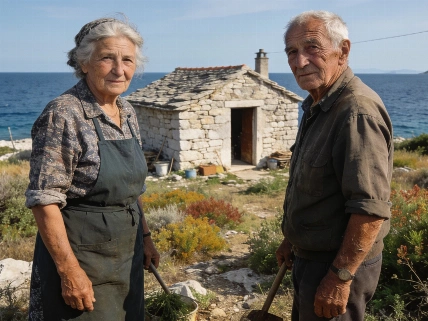
Just twenty years ago, the Nikolic family’s plot had only about thirty old olive trees, yielding just enough for personal use. But three generations decided to change the fate of their land: they cleared the thickets, restored the stone terraces, and planted a thousand new trees, choosing local varieties—Oblica and Lastovka—ideally suited for the stony soil and dry climate of the Adriatic coast.
A hands-on approach
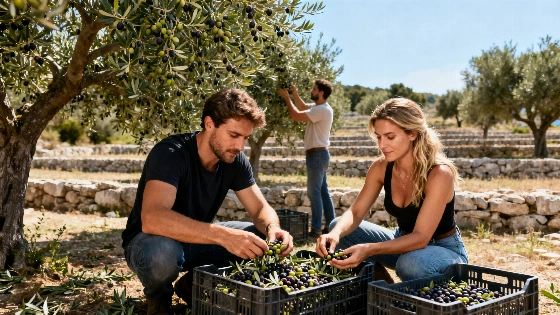
Despite the scale, the family fundamentally refused to use heavy equipment. All 25 tons of olives in the latest harvest were collected by hand—without shakers or combines. According to Mladena Nikolic, who is in charge of marketing, mechanization could speed up the process, but the risk of damaging the trees and roots is too great, and the cost of machinery is prohibitive for a small farm. That’s why every autumn relatives and friends join in the picking, and the harvest is delivered to the mill within six hours of collection—this preserves the oil’s freshness and flavor.
Why their oil is valued
NYIOOC experts noted OPG Nikolic oil for its vibrant green aroma, hints of freshly cut grass, and sweet almond. The quality is ensured by four principles: a specific region of origin, local varieties, hand harvesting, and rapid processing. This approach not only distinguishes the product from the mass market but also allows control over every stage — from pruning to storage.
Challenges and difficulties
However, behind the success lie problems. The climate is becoming increasingly unpredictable: heat and drought require more frequent watering of the trees, and electricity bills are rising. Another challenge is the shortage of labor: young people are in no rush to return to hard agricultural work, and assembling a team each season is getting harder. For now, the family manages thanks to enthusiasm and support from neighbors, but the question of the future of traditional production remains open.
Practice and experience
You can try OPG Nikolic oil not only online — the farm is open to visitors. You simply need to book a tour, come to the Zadar area, and walk along the stone terraces, where you'll learn about the nuances of harvesting and taste the fresh product. When buying, pay attention to the 2025–2026 harvest and an acidity below 0.2% — this guarantees freshness and high quality.
The Nikolic family story is an example of how perseverance and respect for the land can revive abandoned territories. Projects like these are increasingly relevant amid global climate change and rural depopulation. By the way, similar initiatives are underway elsewhere: for instance, in Africa, a 'green wall' of trees is being built to stop the advance of the desert — you can read more about this in the article about fighting desertification in Africa.
For Dalmatia, the success of OPG Nikolic is not just a personal achievement for the family, but also a signal: even a small farm can compete internationally if it combines tradition, quality, and honest work.