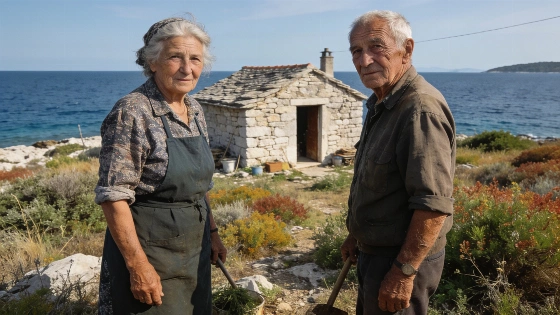
For more than half a century, Ana and Werner Kohl have lived year-round on Male Srakane, a tiny Croatian island with no shops, roads, or restaurants. Their story highlights the challenges and solitude of life in a place abandoned by almost everyone else.
On Male Srakane, a small island off Croatia’s Adriatic coast, Ana and Werner Kohl have spent more than fifty years as its only permanent residents. The couple settled on the island in the 1960s, driven by a doctor’s advice to seek a better climate for their son’s asthma. With the sea air and the promise of tranquility, they built a life far from the conveniences of the mainland.
Male Srakane sits between the islands of Susak and Unije, west of Lošinj. When the Kohls arrived in 1965, the island still had a small community, vegetable gardens, and vineyards. Over time, however, most residents left, and the island’s traditional way of life faded. Today, there are no shops, no roads, no restaurants, and not even a regular water supply. According to HRT, the only sounds that break the silence are the church bells, which ring for religious festivals or to signal emergencies to the neighboring island of Vele Srakane.
The Kohls’ decision to stay was not about seeking isolation, but about necessity and family. Their son’s health needs led them to the sea, and they adapted to the island’s rhythms. While tourists and second-home owners visit during the summer, Ana and Werner remain through the harsh winters, managing daily life without the infrastructure most people take for granted.
Life Without Modern Comforts
Male Srakane’s lack of basic services shapes every aspect of daily existence. There are no cars, no shops, and no cafés. Water must be managed carefully, especially during periods of drought that make growing fruit nearly impossible. The Kohls focus on hardy crops like tomatoes, peppers, and beans, adjusting to the island’s limitations.
Transport is another challenge. The island is connected to Mali Lošinj by boat, but the ferry only stops if passengers request it in advance. This makes every trip to the mainland a matter of planning and patience.
Neighbors Across the Water
On nearby Vele Srakane, just three people were living there when the story was reported: Igor and Blanka Rukavina, and fisherman Dubravko Balenović. Igor, who had spent two decades on the island, described returning to the city as more difficult than enduring the isolation. The peace and freedom of island life come at the cost of easy access to supplies and services.
While Vele Srakane has electricity, water, and internet, residents still call for better transport links. In the 1950s, the island supported around a hundred people, with fishing, farming, and livestock forming the backbone of the community. Today, only a handful remain, and the infrastructure struggles to keep up with even their modest needs.
Solitude and Resilience
The story of Ana and Werner Kohl is a rare example of resilience and adaptation. Their life on Male Srakane is marked by self-sufficiency, careful planning, and a willingness to accept the island’s hardships in exchange for its quiet beauty. The bells that once called a community now ring for just two people, a reminder of how quickly places can empty out.
As noted by HRT, the Kohls’ experience is not about romantic isolation, but about making the best of a situation shaped by family and circumstance. Their story stands as a testament to the realities of rural depopulation and the endurance required to remain when almost everyone else has gone.