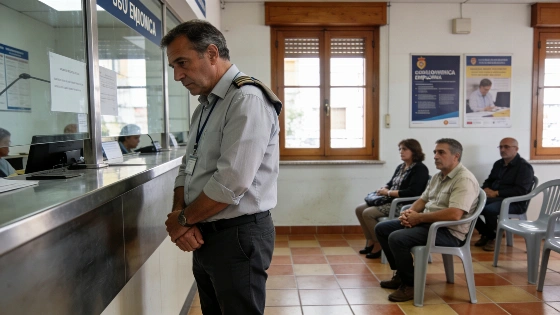
In Merida, a SEPE Employee May Be Disciplined for Assisting Without an Appointment. In Merida, a SEPE employee has faced disciplinary action for attending to citizens without a prior appointment. The incident has sparked protests and raised questions about the agency’s procedures. Authorities cite internal reasons for the decision.
A conflict has erupted in Mérida (Badajoz) surrounding SEPE employee Juan Carlos Nieto, who faces disciplinary action for assisting citizens without prior appointments. According to EL PAÍS, the worker, with nearly 40 years of experience, was helping those unable to secure electronic or phone reservations and issuing the documents needed to process social benefits. Now, he faces serious penalties — ranging from suspension to being transferred to another city.
SEPE management has initiated disciplinary proceedings, citing violations in the process of service provision and document issuance. Nieto himself claims he only received people after finishing with scheduled appointments or when there were open slots. He attributes the situation to chronic understaffing and growing queues: while previously an appointment would take 2–3 days, now the wait can stretch for weeks.
The problem became particularly acute after Badajoz province adopted the 'single district' model. Now, residents of Mérida are sometimes forced to travel up to 100 kilometers for a simple administrative procedure. According to Nieto, not everyone can afford such trips, and the digital divide prevents elderly and low-income citizens from using online services. Many come to the office in person, unable to book an appointment via the internet or the automated system.
The situation is exacerbated by staff reductions: in recent years, the number of employees in the Merida office has dropped from eight to four. Despite this, Nieto emphasizes that walk-in assistance did not interfere with regular work—at times, the service windows sat idle, and some visitors did not show up. He believes his actions helped vulnerable citizens avoid bureaucratic setbacks, especially when applying for subsidies, pensions, and certificates for organizations such as Cáritas or Cruz Roja.
The disciplinary case has raised concerns not only for the employee himself but also among local residents. Several public organizations, including Sindicato 25 de Marzo and Campamento Dignidad, have announced a demonstration in support of Nieto outside the SEPE building on June 3. They are demanding not only the removal of sanctions but also improved services for the unemployed.
The Ministry of Labor and Social Economy told EL PAÍS that the disciplinary proceedings are not just related to assisting people without appointments, but to 'multiple reasons,' which are not disclosed due to confidentiality. The decision will be made by a special commission after reviewing all the circumstances. The ministry also claims that there are no delays in the processing of benefits in Merida, and that scheduling an appointment serves as confirmation that the procedure has begun.
Problems accessing government services and long queues are not uncommon in Spain. Other regions are also introducing new control measures and restrictions, as recently happened in Catalonia, where PAU exam checks have been tightened and changed the rules for students. This reflects a general trend toward stricter procedures and increased workload for government agencies.
For reference: SEPE is the key agency for employment issues and benefit payments in Spain. In recent years, the service has faced an increase in applications, especially after the pandemic and amid changes in labor legislation. Staff reductions and the digitalization of processes often lead to failures and complaints about service accessibility, which has become a topic of public debate and protests.