Engineers at McGill University have developed a groundbreaking origami-inspired design that turns flat sheets into curved, load-bearing structures. This innovation could impact fields from emergency shelters to robotics and aerospace, offering new ways to create strong, adaptable forms.
At McGill University in Canada, researchers Morad Mirzajanzadeh and Damiano Pasini have unveiled a new origami-based structural pattern that could reshape the future of construction and design. Their approach, detailed in Nature Communications, enables a simple flat sheet to be folded into a three-dimensional, doubly curved surface that can switch between flexibility and rigidity on demand.
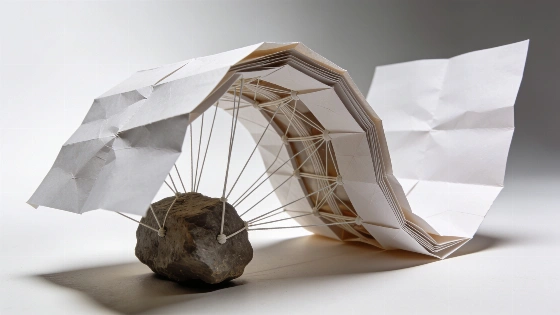
The core of their innovation is the "doubly curved lens-box" pattern. Unlike traditional origami, which often results in either overly flexible or awkwardly faceted forms, this design combines curved folds, straight connectors, and a network of internal tendons. These tendons—thin cables threaded through precise points in the structure—allow the rigidity of the final form to be adjusted after assembly. When the tendons are loose, the structure can be folded, compressed, or reshaped. Tightening the tendons locks the form in place, enabling it to withstand significant loads from multiple directions.
How the Pattern Works
Traditional foldable structures have struggled to balance strength and adaptability. Smooth, curved surfaces tend to be too pliable, while rigid alternatives are often bulky and difficult to deploy. The new pattern overcomes these limitations by using a calculated arrangement of curved and straight folds, creating surfaces that resemble spheres, toroids, or containers with complex curves.
To test their concept, the team used differential geometry and numerical optimization to design the fold maps. They then laser-cut 0.21-millimeter cellulose cardstock and manually folded the prototypes, confirming that the intended shapes could be physically realized. The internal tendons, made from nylon thread, were key to controlling the structure's mechanical properties.
Impressive Strength from Simple Materials
The strength of these folded forms comes not just from the material, but from the geometry and the tensioned tendons. The three-dimensional shape distributes forces efficiently, while the curvature and pre-tensioning minimize bending and twisting that would otherwise cause a flat sheet to collapse.
In laboratory tests, a single arched prototype weighing just eight grams supported a load 162 times its own weight—four times more than a similar structure stiffened with glue. The researchers also found that by adjusting the tension in the tendons, they could increase the rigidity of the structure by several orders of magnitude, allowing the same piece to move through different stable configurations before locking into a strong, load-bearing arch.
Potential Applications Across Industries
The ability to transport these structures flat and then deploy them into strong, curved forms could be a game-changer for emergency shelters, protective exoskeletons, and reconfigurable robots. The researchers highlight possible uses in smart textiles, helmets, shape-shifting robots, and aerodynamic surfaces that can adapt to changing conditions.
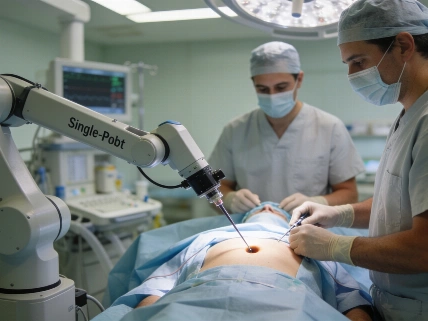
In medicine, such adaptable surfaces could better conform to the human body or bones, while the precise control offered by the tendons may benefit soft robotics for minimally invasive surgery. The technology's versatility suggests a wide range of future applications, especially where space-saving and adaptability are crucial.
Limits and Next Steps
Despite the promise, the researchers caution that their prototypes were not made from ordinary office paper. The models used laser-cut cardstock, nylon thread, and a custom mechanism to control tendon tension. Scaling up the design for larger structures introduces new challenges, including the effects of gravity, material properties, and manufacturing imperfections.
Further research will be needed before this origami-inspired system can be applied to full-scale buildings or commercial products. As noted in the study, adapting the technique for real-world construction will require careful consideration of these factors.
This work, as reported by Talent24h, marks a significant step toward reprogrammable, lightweight structures that could one day change how we think about building and design.