Human rights groups in Catalonia report growing administrative hurdles to public funding. Efforts to commemorate Franco-era repression face resistance from authorities and police unions. The aging of witnesses adds urgency to the issue.
Efforts to preserve the memory of Franco-era repression in Catalonia are facing new setbacks as administrative obstacles increasingly hinder the work of human rights organizations. Associations dedicated to documenting and sharing testimonies of political prisoners and victims of the dictatorship report that stricter requirements and bureaucratic controls are making it harder to access public funding. This trend has forced several groups to withdraw from or forgo applications for grants from institutions such as the Institut d’Indústries Culturals de Barcelona (Icub).
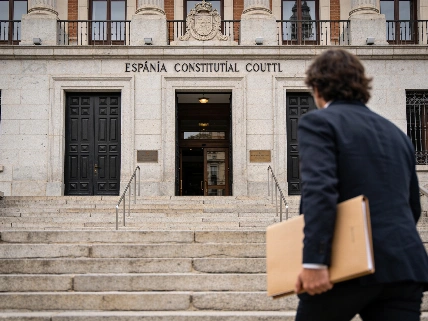
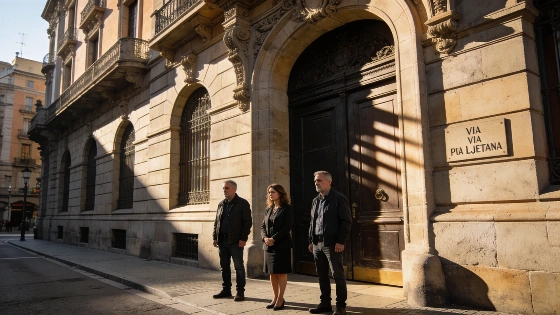
Beyond funding, symbolic recognition of sites linked to repression remains a point of contention. The Audiencia Nacional, which succeeded the Francoist Tribunal de Orden Público (TOP), has declined to authorize a commemorative plaque at the Puerta del Sol building in Madrid, once home to the Dirección General de Seguridad—a notorious detention and torture center during the dictatorship. Meanwhile, the central government has blocked proposals to convert the former police headquarters at Vía Laietana 43 in Barcelona into a memory center, despite calls from survivors and activists, including the late Blanca Serra, who was interrogated there by the Brigada Político-Social.
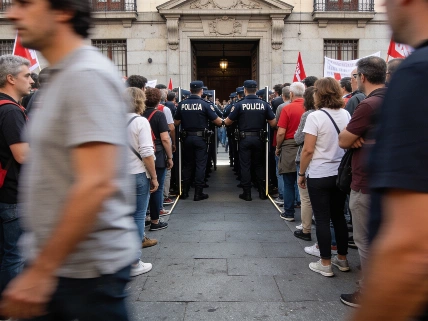
Police unions have largely avoided dialogue with the Associació Catalana de Persones Ex Preses Polítiques del Franquisme regarding the future of the Vía Laietana site. Only a minority faction within the police has engaged with the association, according to its representatives. This reluctance underscores the persistent sensitivity around Spain’s recent past and the legacy of state violence.
Carles Vallejo, president of the association of former political prisoners, warns that the voices of those who experienced repression firsthand are fading as witnesses age. The association notes that fewer survivors are able to share their stories in schools and public forums, raising concerns about the continuity of historical memory. In response, the latest issue of Documents del Memorial Democràtic, titled Generacions TOP. Resistir, protestar, conquistar and edited by historian Manel Risques, compiles accounts from a dozen individuals who endured detention at the Barcelona police headquarters, aiming to counteract collective amnesia.
Spain’s approach to its Francoist past has long been shaped by a mix of political caution and reluctance to confront uncomfortable truths. During the transition to democracy, both left-wing and nationalist leaders often avoided challenging the remnants of the old regime, fearing instability. It was not until the government of José Luis Rodríguez Zapatero that official efforts to recover historical memory gained momentum, though these initiatives have faced criticism and accusations of reopening old wounds. The current administrative barriers and lack of institutional support suggest that the struggle to preserve and recognize the legacy of Franco-era repression remains unresolved.
For context, Spain’s 2007 Law of Historical Memory and the more recent Law of Democratic Memory were designed to address the legacy of the dictatorship, including the exhumation of mass graves and the removal of Francoist symbols. However, implementation has varied widely across regions, and resistance from some sectors of government and society continues to limit progress. The situation in Catalonia reflects broader national debates over how to confront the past and ensure that the experiences of victims are not forgotten as time passes.