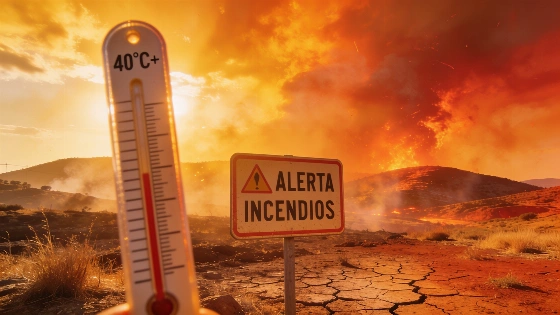
Spain faces a new surge of extreme heat next week. AEMET signals high risk, especially in southern and central areas. Authorities urge caution as temperatures may exceed 40°C and wildfire danger rises.
Spain is bracing for a significant spike in temperatures next week, with the Agencia Estatal de Meteorología (AEMET) forecasting a period of intense heat that could push thermometers above 40°C in large parts of the country. The warning comes as the agency highlights a high risk level, particularly during midday hours, and urges residents to take extra precautions.
The shift in weather patterns is expected to become noticeable over the weekend. After several days of elevated temperatures in the eastern half of the peninsula, atmospheric conditions will once again favor the arrival of very warm air masses from North Africa. This influx will be accompanied by dry air and suspended dust, further intensifying the heat.
According to AEMET, the situation will be shaped by a strengthening high-pressure ridge over the Iberian Peninsula and the presence of a DANA (isolated depression at high levels) to the west. This combination is set to drive a steady rise in temperatures across much of Spain and the Balearic Islands.
The heatwave is expected to begin in earnest on Saturday, July 18. On that day, maximum temperatures will already be extremely high in inland Andalusia, especially in low-lying areas and major river valleys, where values near 40°C are likely. By Sunday, the heat will intensify and spread, with similar temperatures anticipated in parts of Castilla-La Mancha, the Tajo valley, and the interior of Mallorca.
From Monday onward, the forecast becomes less certain. Some southern regions may see a slight dip in temperatures, but most of the country will continue to experience rising heat, expanding the areas affected by extreme conditions.
Tuesday and Wednesday are expected to be the most challenging days, with AEMET projecting that much of the southern interior and Mallorca could see widespread temperatures above 40°C. The most affected zones are likely to be the valleys and depressions of Andalusia, where thermometers could reach between 42°C and 44°C. La Mancha may also record exceptionally high values, while the Ebro valley and other northeastern depressions could approach 39°C.
Beyond daytime highs, AEMET draws attention to the risk of tropical and even torrid nights, when temperatures remain elevated through the early hours. This can make rest difficult and increase health risks, particularly for older adults, those with chronic illnesses, and other vulnerable groups.
The agency also warns of a sharp rise in wildfire danger. The combination of extreme heat, dry conditions, and wind in some areas will push fire risk to critical levels in many regions. Dry thunderstorms developing over mountain areas in the afternoons could further complicate the situation, as lightning strikes may ignite new fires with little accompanying rainfall. In light of these threats, authorities are urging the public to exercise maximum caution in natural areas and to avoid any activities that could spark fires. The recent containment of the Los Gallardos wildfire in Almería, where authorities managed to control the blaze and identify victims, underscores the ongoing threat posed by such conditions; more details on that incident can be found in this report on the Los Gallardos fire response.
While the trend toward a very hot episode appears well established, AEMET notes that there is still uncertainty regarding the final intensity, geographic reach, and duration of the event. The evolution will depend on several atmospheric factors, including the behavior of the DANA to the west, the strength of the subtropical ridge, and the possible arrival of cooler air masses from higher latitudes.
Current projections suggest a gradual decrease in temperatures from Thursday, July 23, in much of Spain. However, the southern third of the peninsula is expected to endure very high values for several more days. Episodes of extreme heat like this have become more frequent in recent years, often leading to increased health risks, disruptions to daily life, and heightened pressure on emergency services. Spain's authorities continue to monitor the situation closely, with updated advisories expected as the event unfolds.