Spain's Foreign Minister urges Alberto Núñez Feijóo to distance himself from Mariano Rajoy's remarks about the French football team. The dispute highlights growing tensions over the Popular Party's stance on foreign policy and relations with key partners.
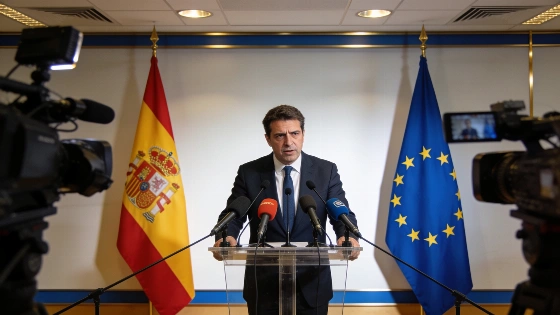
Spain's Foreign Minister, José Manuel Albares, has publicly demanded that Popular Party leader Alberto Núñez Feijóo formally distance himself from comments made by former Prime Minister Mariano Rajoy regarding the French national football team. Speaking in Brussels, Albares described Rajoy's recent opinion piece—where the ex-leader claimed the French team plays "without Frenchmen"—as unacceptable and called for a clear repudiation from the current PP leadership.
Albares criticized what he sees as a pattern of the Popular Party undermining Spain's foreign policy. He accused the party of attempting to disrupt, boycott, and sabotage Spain's diplomatic relations, particularly with countries such as France, Morocco, and Mexico. The minister insisted that Feijóo, as head of the main opposition, should not only reject Rajoy's statements but also stop questioning Spain's ties with longstanding allies.
He also called on the digital outlet _El Debate_, which published Rajoy's article, to remove the piece and issue a correction, making it clear that the views expressed do not reflect the publication's stance. Albares emphasized that any rhetoric that could be interpreted as racist or xenophobic does not represent Spain, and urged the Popular Party to reconsider its approach to international relations.
The dispute comes after the PP blocked the ratification of the 2023 Treaty of Friendship and Cooperation between Spain and France in the Senate, filing a constitutional challenge against the agreement. Albares argued that this move, along with recent statements about the French football team, positions the PP as openly hostile to France. He further accused the party of adopting antagonistic stances toward Morocco and Algeria, and of spreading unfounded claims about gas supplies from Algeria, despite the country's reputation as a reliable energy partner. The minister also pointed to attempts to strain relations with Mexico.
Albares questioned the logic behind the PP's foreign policy, asking on what grounds the party justifies its actions against Spain's interests and its European commitments. He stressed that understanding Spain's priorities goes beyond language skills, and called for Feijóo to make it clear that he does not share Rajoy's views. The minister concluded by urging the PP to stop undermining Spain's internationally recognized foreign policy and to support the country's close friendships abroad.
Spain's foreign policy has traditionally focused on maintaining strong ties with neighboring countries and key partners within the European Union. The Treaty of Friendship and Cooperation with France, signed in 2023, was intended to deepen collaboration in areas such as security, trade, and cultural exchange. Disputes over such agreements can have practical implications for cross-border cooperation, economic projects, and the movement of people and goods. Political tensions between major parties over international relations may also affect Spain's standing within the EU and its ability to negotiate on issues ranging from energy security to migration. The current controversy highlights the sensitivity of public statements by political leaders, especially when they touch on topics like national identity and international partnerships.