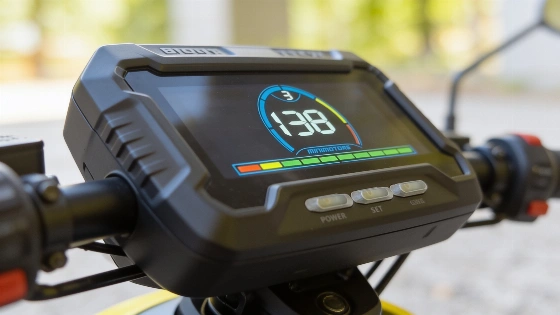
In late October, Almería’s Policía Local checked compliance with revised traffic rules from Spain’s Dirección General de Tráfico (DGT). Officers removed 113 personal mobility vehicles, commonly known as electric scooters, and issued more than 200 traffic penalties during the campaign’s first phase. The DGT classifies electric scooters within the broader category of personal mobility vehicles (VMP) and publishes national road-safety guidance on their lawful use.
The most frequent offences included vehicles missing from the DGT register, which police described as equivalent to being unregistered, and riding without third-party liability insurance. Failure to wear a helmet was also among the main violations. The Policía Local said fines for these offences range from €200 to €800.
The rules took effect on 1 October, according to the campaign information. They set a minimum age of 15 for riding a personal mobility vehicle. Riders must wear a helmet. A reflective vest is required at night or in poor visibility, and vehicles must have permanent lighting.
These vehicles may use segregated routes outside built-up areas, including cycle paths, unless signs prohibit them. They cannot be ridden on pavements or pedestrian areas, or on motorways and other restricted roads, including interurban roads and urban tunnels. The permitted speed is 6–25 km/h. Riders face the same maximum alcohol limits as other drivers and may not ride with drugs in their system. Headphones and mobile phone use while riding are also prohibited.
Inspector Israel Ruiz of the Policía Local’s Department of Security and Participation urged users to act responsibly and prudently, saying their conduct on public roads affects everyone. The regulation’s stated priority is to improve safety for vulnerable road users as travel patterns change.
The revised rules formally define “vulnerable road user” to include pedestrians, with particular attention to children and older people or people with disabilities. The category also covers cyclists and personal mobility vehicle users, as well as motorcycle and moped drivers and passengers. The reform adds a new section on circulation in urban areas. DGT road-safety coverage also references an RACC report examining the profile and behaviour of scooter and other VMP users in a city.
The publication has also reported on strike-related disruption, including a live programme interruption at Canal Sur.