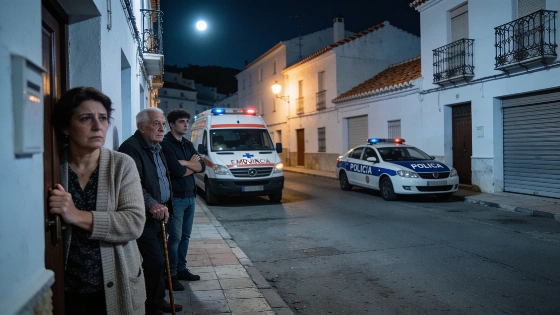
A magnitude 5.0 earthquake struck Alhendín near Granada overnight. The Junta de Andalucía activated emergency protocols. Residents were urged to stay calm and follow safety advice.
Emergency services in Andalusia moved swiftly into action early Saturday after a magnitude 5.0 earthquake shook the Granada metropolitan area. The Junta de Andalucía triggered the first level of its seismic risk emergency plan following the tremor, which had its epicenter in Alhendín at a depth of just two kilometers. The decision was announced by Antonio Sanz, the regional minister for Presidency, Health and Emergencies, in response to the scale of the event and the volume of calls received by the 112 emergency line—over 80 within hours of the quake.
According to the Instituto Geográfico Nacional (IGN), the earthquake struck at 1:04 a.m., sending noticeable tremors across much of Andalusia. While the epicenter was located in Alhendín, the shockwaves were felt in every province except Huelva and Cádiz, with the strongest effects reported in Granada, the Costa de Almería, Málaga, and parts of Jaén. The Junta immediately advised residents to remain calm, avoid entering or leaving buildings, and stay clear of facades, balconies, and walls due to the risk of falling debris.
In the eight hours following the main quake, four additional tremors—ranging from magnitude 2.2 to 3.7—were recorded in nearby municipalities including Gójar, Ogíjaras, Otura, and La Zubia. All these towns, like Alhendín, are situated within the Granada metropolitan zone, an area known for its seismic activity. The rapid succession of aftershocks kept emergency services on alert, though no major damage or injuries were reported in the initial hours.
Authorities emphasized the importance of following official guidance and not spreading rumors or misinformation. The emergency plan includes measures to monitor structural safety, coordinate local response teams, and provide updates to the public as the situation evolves. The Junta’s recommendations focused on practical steps: staying away from potentially unstable structures, limiting movement outdoors, and remaining attentive to further instructions from emergency services.
Spain’s southern regions have experienced several notable natural events in recent years, highlighting the need for robust emergency protocols. For example, severe storms and flooding have previously tested local response systems, as seen when violent weather in Valencia led to widespread incidents. The current activation of the seismic emergency phase in Granada underlines the region’s ongoing vulnerability to both meteorological and geological risks.
Granada and its surroundings are among the most seismically active areas in mainland Spain, with a history of moderate to strong earthquakes. The region’s geology, shaped by the collision of the Eurasian and African tectonic plates, makes it prone to such events. While most tremors are minor, authorities maintain detailed contingency plans to minimize risks to residents and infrastructure. The latest incident serves as a reminder of the importance of preparedness and clear communication in managing natural hazards in southern Spain.