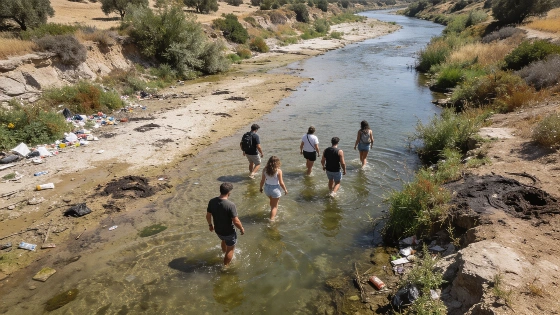
Tourist pressure is devastating rivers in Andalucía. Authorities are imposing new limits, but fragile habitats remain at risk. Local experts warn that reopening sites like Chíllar could accelerate environmental decline.
Tourism is pushing Andalucía’s rivers to the brink, with authorities now forced to impose strict limits on access to some of the region’s most popular natural sites. The Chíllar river in Nerja, Málaga, once drew up to 3,000 visitors daily, leading to severe ecological damage and a ban on entry since August 2023. Despite the ongoing prohibition, the Junta de Andalucía is preparing to reopen the area under private management, sparking criticism from environmental groups and scientists who argue that even reduced visitor numbers could further harm the river’s unique biodiversity.
Currently, two companies—Travelnatura and Sando—are competing for the contract to manage access to Chíllar. Both propose daily visitor caps, with offers ranging from 300 to 500 people, and ticket prices between €4.90 and €10. The plans include regular maintenance and emergency protocols, but environmentalists remain unconvinced. According to Rafael Yus of Ecologistas en Acción, the sheer volume of foot traffic destroys riverbed life, and the area’s status as a Reserva Natural Fluvial should guarantee maximum protection. University experts echo these concerns, warning that even 500 visitors a day is unsustainable for such a sensitive ecosystem.
Elsewhere in Andalucía, similar pressures are forcing new restrictions. At Río Verde near Otívar, Granada, the number of vehicles allowed daily has been capped at 100, with access fees charged by the local cooperative. Despite these measures, the riverbanks and pools are often crowded, and injuries among visitors are common. The Dúrcal, Castril, and Lanjarón rivers have also suffered from overuse, prompting bans on walking inside certain riverbeds and limits on bathing areas. In Cádiz, rivers like Majaceite and Bocaleones now operate under daily visitor quotas, but environmental groups say noise, litter, and pets continue to disrupt wildlife.
Despite mounting evidence of ecological stress, the Junta de Andalucía has yet to implement a comprehensive management plan for the region’s rivers. In Málaga province, rivers such as Patalamara, Cástor, Padrón, Higuerón, and the popular Cueva del Gato pool face similar issues, with illegal damming and uncontrolled waste compounding the problem. The Guadalmina river near Marbella is saturated throughout the summer, while at Turón, vehicle access has been banned to reduce pressure on the site. Local officials and biologists report ongoing problems with litter, unsupervised children and pets, and visitors venturing into protected zones, threatening rare species like the endemic cacho malagueño fish and native otters.
Calls for better regulation and public awareness are growing. Antonio Herrera, an environmental consultant, stresses the need for strict visitor controls and education about the impact of tourism on river ecosystems. He points to existing permit systems for popular hiking routes as a model for managing visitor numbers. The debate over how to balance public access with conservation is intensifying, especially as social media continues to drive crowds to previously little-known sites. The situation in Andalucía echoes broader concerns about the sustainability of nature tourism, as highlighted in other recent incidents such as the fatal landslide in León linked to sudden flooding.
Andalucía’s rivers are vital not only for biodiversity but also for local communities and tourism economies. Many of these waterways are protected under Spanish and EU law, yet enforcement and resources often lag behind the scale of the problem. The region’s climate, with hot summers and limited rainfall, makes these habitats especially vulnerable to overuse. As visitor numbers continue to rise, the challenge for authorities will be to find solutions that protect fragile ecosystems while allowing sustainable enjoyment of Andalucía’s natural heritage.