Catalan Authorities Step Up War on Boar Plague: New Measures and Figures. Catalonia has launched a large-scale operation to cull wild boars amid the threat of African swine fever. Authorities have enlisted hunters and special teams. The goal is to halve the population and stop the spread of the infection.
The largest mass capture and culling operation of wild boars in recent years has begun in Catalonia. The reason is an outbreak of African swine fever, threatening not only animals but also the region's economy. Suburban areas of Barcelona, including Palau-solità i Plegamans, have been placed under special surveillance, where, despite no confirmed cases of the disease, a strict monitoring regime is in place.
Emergency measures and new resources
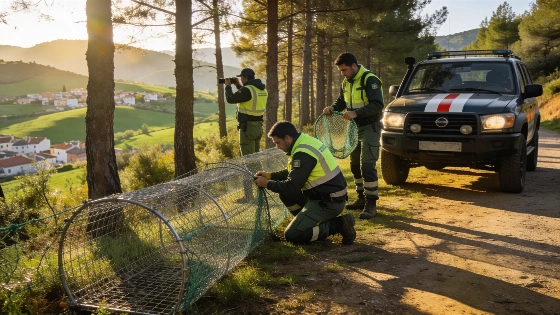
By order of the Catalan government, not only local hunters but also special teams formed by the state company Tragsa have been enlisted to combat the spread of the infection. Seven million euros have been allocated for these purposes. Specialists have been provided with 170 new employees, 57 Pig Brig nets, and 51 SUVs. Their task is to locate and remove infected animals, set traps, and control the population.
Since the beginning of the year, more than 26,000 boars have already been culled in the region, but this is not enough: according to authorities, there are up to 125,000 individuals in Catalonia in the winter, and after the breeding season—up to 180,000. The goal is to reduce the population by at least half to stop the spread of the virus.
The role of hunters and ethical dilemmas
Members of the Catalan Hunting Federation play a key role in the fight against the plague. Many of them, including 28-year-old Amor Jiménez from Palau-solità i Plegamans, spend their own money on ammunition and bait without receiving any compensation. According to federation head Joaquín Sarsoso, the cost per bullet reaches five euros, and hunters are forced to purchase even the corn for traps themselves.
The authorities demand the strictest measures: to destroy all wild boars within a 20-kilometer radius from the epicenter of the outbreak — the city of Cerdanyola del Vallès. However, according to the latest data, of the planned 8,000–10,000 animals, less than 5,000 have been eliminated. Hunters admit that it's psychologically difficult to carry out such orders, especially when it involves females with offspring.
Technologies and challenges on the ground
In addition to hunters, new Tragsa teams are searching for fallen animals across more than a thousand square kilometers. Trained dogs are used for this purpose, but finding suitable animals has proven harder than expected. Employees undergo special training: they know how to set traps, collect biomaterial, and deliver remains to the crematorium. Hunters also participate in collecting samples, using methods recommended by veterinarians.
There are no restrictions on visiting natural areas in the region, but local residents have been warned about the risks. Authorities emphasize that combating the plague is a task not only for professionals, but for the entire community. In similar situations, when it came to protecting historical sites, local residents were also active — as was the case with the prolonged dispute over the Fierro mansion in Madrid.
Context and outlook
According to authorities, Tragsa employees will be working in the region at least until the end of 2026. The tasks of the new teams include not only the capture and elimination of wild boars, but also ongoing monitoring of the situation. Authorities believe that a comprehensive approach will help avoid economic losses and protect farms from the further spread of African swine fever.