Audi launches the 2026 Q7 with a refined V6 TDI engine, cutting-edge MHEV Plus hybrid system and a focus on comfort, efficiency and family versatility. The SUV arrives with more technology and a bold design update.
The 2026 Audi Q7 arrives in Spanish dealerships with a clear ambition: to set a new standard for luxury SUVs. This third-generation model combines a powerful V6 TDI engine with the latest MHEV Plus mild hybrid technology, aiming to deliver both efficiency and comfort for long-distance travel. Audi’s approach is direct—keep the diesel heart, but make it smarter and more refined.
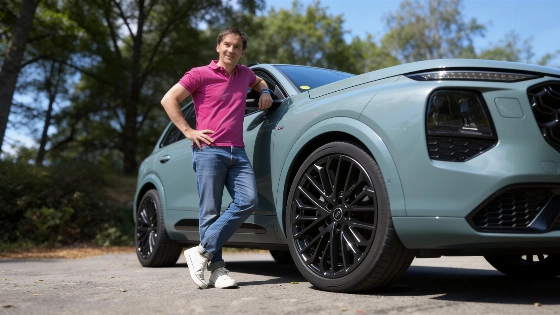
With its imposing size—now over five meters long, 65 mm taller and 40 mm wider than before—the Q7’s presence is unmistakable. The design, led by Spanish designer Ramón Sellers, emphasizes solidity and elegance without feeling bulky. The front end is more upright, the Singleframe grille features illuminated segments, and the Digital Matrix LED headlights project high-resolution patterns to assist drivers in challenging conditions. A notable safety innovation is the turn signals that cast warnings onto the road, alerting cyclists and pedestrians to the vehicle’s intentions.
At the rear, third-generation digital OLED taillights offer customizable light signatures, connected by a continuous band that visually widens the car. Standard 20-inch wheels can be swapped for up to 23-inch options, filling the muscular arches and giving the Q7 a distinctly athletic stance—though tire replacements will be felt in the wallet.
Diesel Power, Hybrid Intelligence
Under the hood, Audi remains committed to diesel for those who value range and towing capacity. The 3.0-liter V6 TDI comes in two versions: 245 hp and 299 hp, both paired with an eight-speed Tiptronic automatic and permanent quattro all-wheel drive. The transmission is smooth and responsive, though tight maneuvers remain a minor weakness.
The real leap is the MHEV Plus system, a 48-volt mild hybrid setup that adds up to 18 kW (24 hp) and 370 Nm of torque during acceleration. An electric compressor eliminates turbo lag, delivering immediate response and a near-electric feel at low revs. The 299 hp version accelerates from 0 to 100 km/h in 6.2 seconds and reaches 235 km/h, impressive for a vehicle weighing 2.5 tons.
Efficiency is a highlight: with a certified consumption of 7.2–7.9 l/100 km and an 80-liter tank, the Q7 can travel over 1,100 km between refuels. Optional adaptive air suspension lowers the ride by 30 mm, while four-wheel steering improves urban maneuverability. Despite its size, the Q7 handles curves with surprising agility.
Interior: Digital, Spacious, Luxurious
Inside, the Q7 justifies its premium status. Automatic doors with presence sensors add a touch of luxury, though their necessity is debatable. The cabin can be configured for five, six, or seven passengers, and the second row accommodates up to three child seats at once—underscoring its family focus.
Materials are top-tier, with upholstery in stone beige or tamarind brown, and trim in natural ash wood or carbon fiber. The digital setup is extensive: an 11.9-inch Audi virtual cockpit, a 14.5-inch curved OLED central display for the MMI system, and a 12.3-inch screen for the front passenger. Connectivity is robust, featuring an app store, voice assistant with ChatGPT integration, and a Bang & Olufsen 4D sound system with 22 speakers and 1,360 W, allowing passengers to feel the bass in their seats.
Wireless Qi 2.2 charging pads and high-power USB-C ports (up to 100 W in the third row) ensure devices stay charged. The panoramic roof uses switchable LED segments to go from opaque to transparent, eliminating the need for physical blinds. Luggage space is generous: 670 liters with five seats, expanding to 2,075 liters with the rear rows folded—outperforming both the BMW X5 and Mercedes GLE in maximum cargo volume.
Market Position and Availability
The new Audi Q7 is not aimed at the mass market, but its blend of technology and space is among the most honest in the segment. Prices in Spain start at €95,300, with orders open now and first deliveries scheduled for September. The Q7’s main rivals remain the BMW X5 and Mercedes GLE, though Chinese contenders like the Xpeng G9 are entering the fray. For those seeking a sportier edge, the Porsche Cayenne offers a different approach, but the Q7 stays true to its roots as the most spacious and capable family SUV.
For readers interested in how other brands are challenging the established order in the premium SUV segment, the recent arrival of the Changan Deepal S07 2026 with major battery and power upgrades is worth noting—see this detailed look at the Chinese electric SUV’s European ambitions.
As the Q7 enters its third generation, Audi’s strategy is clear: evolve without losing the DNA that made the model a benchmark for luxury, versatility and long-distance comfort. The 2026 update reinforces its position as a reference point for families who demand more from their SUV—both in technology and in everyday usability.