Madrid’s regional government has issued a 48-hour ultimatum to clear the Puerta del Sol protest camp after reporting vandalism and threats at the Real Casa de Correos. The standoff exposes deep divisions between local and national authorities as public events and daily life are disrupted.
Three nights of protest have turned Madrid’s Puerta del Sol into a battleground between city and state. Isabel Díaz Ayuso’s regional government wants the protest camp gone now. Officials say the Real Casa de Correos, the Community of Madrid’s historic headquarters, has been hit with graffiti, trash, and urine. Protesters even climbed the building’s windows. The government calls it chaos.
After 62 and a half hours of occupation, patience snapped. The regional executive gave Francisco Martín, the central government’s delegate, 48 hours to clear the square. If nothing happens, Madrid’s leaders say they will go to court. They plan to file a contentious-administrative appeal to force action. The standoff is real.
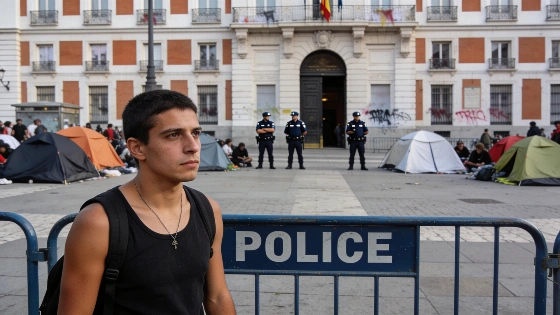
The protest camp in Puerta del Sol began after the eviction of 87-year-old María del Carmen Abascal, which became a catalyst for mass demonstrations and the establishment of a tent city in central Madrid.
The Real Casa de Correos sits at the heart of this fight. It’s a protected landmark, officially listed as a Bien de Interés Cultural. On Monday night, crowds surrounded the building. Regional officials say some protesters climbed onto the windows and blocked evacuation routes. Only after these incidents did the National Police step in. They set up barriers and increased their presence to keep demonstrators away from the building.
The regional government’s complaint lists several offenses. Graffiti, including threats against President Ayuso. Urine stains on the walls. Garbage thrown at windows and balconies. Officials say these acts damage a historic site and disrupt the government’s work. They also warn that the annual Hispanidad celebrations are now at risk. Concerts and exhibitions are on hold until the square is cleared.
Both the Community and the City Council of Madrid have demanded action. The central government has not budged. The Delegación del Gobierno says the protest is “civic and peaceful.” Organizers, led by the Sindicato de Inquilinas, have kept the camp going to push for anti-eviction laws. Regional officials fear this could drag on much longer than anyone expected.
According to The Guardian and Euronews, the encampment quickly grew to between 100 and over 300 tents, with hundreds of participants, and included activists from more than 20 European countries, giving the protest significant international visibility.
“Impunity, illegality, and disorder cannot continue unchecked in Puerta del Sol,” said Miguel Ángel García, the regional spokesperson and Presidency councillor. He accused the government delegate of “complicity” with what he calls an illegal occupation. The central government stands by its response. Officials defend the National Police and say they are committed to public safety and protecting the Real Casa de Correos.
The clock is ticking. If the camp is not dismantled by the deadline, Madrid’s leaders say they will take the fight to court. They warn that tourism, business, and the city’s cultural heritage are all at risk. The blockade continues. No one knows if the protest will end soon or become a permanent fixture in Madrid’s most famous square.
This is not the first time regional and national authorities have clashed over public order and symbolic spaces. As reported earlier, disputes over Spain’s political legacy and the management of public institutions keep surfacing. The current standoff in Puerta del Sol shows how fast a protest can turn into a test of power. Madrid’s government has drawn its line. The next days will show if the central government will cross it or face a drawn-out legal and political fight.