Madrid’s president is taking legal steps to restrict the inclusion of new overseas voters who gained Spanish nationality through the Law of Grandchildren. The move targets changes in the electoral roll and aims to limit voting rights to those with direct Madrid ties.
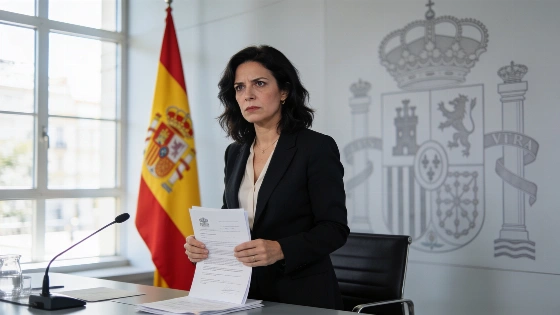
Madrid’s regional president, Isabel Díaz Ayuso, is challenging the central government’s approach to the overseas electoral roll. Her administration plans to formally object to what she describes as manipulation of Madrid’s voter registry through the Law of Grandchildren and recent changes to overseas voting rules. This comes before the Central Electoral Board has issued its own instructions to consulates, making Ayuso’s move a preemptive one.
Ayuso wants only those who can prove their last Spanish-resident ancestor lived in a Madrid municipality to be added to the region’s overseas electoral roll. She rejects broader criteria like "greater ties" or "rootedness," calling them vague and open to abuse. Her government aims to exclude descendants of exiles from other regions unless they can show a direct family link to Madrid, narrowing the group of eligible new voters.
As of September 5, Madrid had 422,732 overseas voters on its rolls, representing about 15% of the region's entire electorate.
— The Objective
This legal action follows a recent increase in registrations by people who obtained Spanish nationality under the Law of Democratic Memory, often called the Law of Grandchildren. The law lets descendants of Spanish exiles claim citizenship, but Ayuso argues that the central government’s approach could artificially boost Madrid’s overseas electorate. She insists that only those who can prove a Madrid connection at a Spanish consulate should be counted, in line with the region’s Statute of Autonomy.
During a heated session in the Madrid Assembly, Ayuso accused the central government of trying to alter the electoral roll through administrative instructions tied to the Law of Grandchildren. She called on the Central Electoral Board to make sure any new guidance to consulates follows the criteria in Madrid’s Statute of Autonomy, which recognizes as Madrid residents only those whose last administrative address was in the region, along with their descendants if properly registered.
The debate over the Law of Grandchildren and its effect on voting rights goes beyond Madrid. Spain’s Supreme Court has already stepped in, ordering a temporary halt to new electoral registrations for those who gained citizenship under the law, as reported earlier. This freeze has left thousands of new citizens waiting for a final decision on their right to vote.
The Supreme Court's suspension does not affect those who can provide documentary proof of descent from Spaniards exiled during the Franco era. The measure specifically targets the electoral effects—such as voting rights and registration—rather than the granting of citizenship itself, according to EFE and France 24 reports. The legal dispute has escalated to the national level, with Prime Minister Pedro Sánchez publicly defending the Law of Grandchildren after the court's decision.
— EFE and France 24
Ayuso’s move raises the stakes in the ongoing dispute over who gets a say in Madrid’s politics from abroad. By demanding strict documentation and rejecting broader criteria, her administration is pushing back against what it sees as central government overreach. The outcome will affect not just the size of Madrid’s overseas electorate, but also the region’s political balance. In Spain, where the legacy of exile and debates over historical memory remain sensitive, Ayuso’s legal challenge highlights the tensions at the intersection of identity, migration, and voting rights.