Jorge Azcón calls on all Aragón mayors to organize rallies supporting Ceuta and defending Spain’s sovereignty. The move comes amid political friction and disputes over key infrastructure projects.
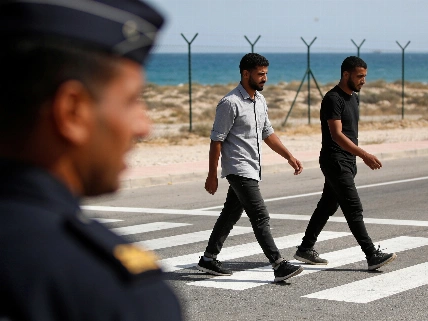
Aragón’s president, Jorge Azcón, has called on every mayor in the region to organize public rallies in support of Ceuta and to defend Spain’s national sovereignty. The appeal follows a nationwide call by the FEMP for demonstrations at town halls, aiming to show solidarity with Ceuta after recent tensions at the border. Azcón emphasized that the initiative should unite residents regardless of political affiliation, underlining the importance of a collective response to what he described as an attack on Spain’s security and borders.
While similar rallies have seen broad political participation in other regions, Aragón’s Socialist mayors have so far kept a low profile. However, according to party sources cited by EL MUNDO, some PSOE mayors are expected to join the demonstrations. Azcón stressed the significance of these gatherings, scheduled for 8 p.m. across Spain, arguing that a strong turnout would demonstrate the country’s commitment to territorial integrity. He insisted that the events in Ceuta were not merely a migration crisis but a direct challenge to Spain’s sovereignty.
The president’s call comes amid ongoing disputes with the central government. Azcón criticized Madrid for what he described as obstruction of major data center projects in Aragón, following the announcement of a new royal decree regulating such investments. He expressed frustration that, while the government supports similar initiatives in Catalonia, Aragón faces bureaucratic hurdles that threaten local economic growth. Azcón warned that these obstacles could have unprecedented consequences for the region’s economy, undermining years of effort to attract investment.
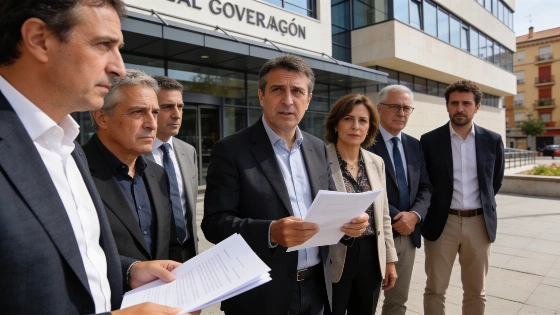
Azcón made his remarks outside the Ministry of Transport, where he was joined by the mayors of Zaragoza, Huesca, and Teruel to formally oppose a government study that rules out a double-track, electrified rail line for the Cantabrian-Mediterranean Corridor. He argued that maintaining a single, slow rail line between Teruel and Sagunto is a historic mistake that will hold back both Teruel and Aragón. The ministry, for its part, cited the region’s challenging terrain as justification for its decision, proposing instead to increase capacity with dual locomotives on steep sections. This approach, however, breaks with earlier promises of high-performance rail and is seen by Aragón officials as a cost-cutting measure that will disadvantage the region for decades.
The debate over Ceuta’s security and Spain’s territorial integrity has become a flashpoint in national politics. As previously reported in related coverage, Ceuta’s leadership has warned of ongoing social strain following mass arrivals at the border, highlighting the broader implications for Spain’s border management and regional relations. The current standoff between Aragón and the central government reflects deeper tensions over resource allocation, infrastructure, and the balance of power between Madrid and the autonomous communities.
For context, Ceuta is a Spanish enclave on the North African coast, frequently at the center of migration and security debates. The FEMP (Spanish Federation of Municipalities and Provinces) often coordinates local government responses to national issues. The Cantabrian-Mediterranean Corridor is a strategic rail project intended to improve connections between Spain’s northern and eastern regions, but its implementation has been contentious, especially regarding investment and technical standards. These disputes underscore the ongoing challenges of balancing regional interests with national priorities in Spain’s complex political landscape.