Barcelona’s city hall handled 4.13 million citizen procedures in a year. Online channels now account for 60% of all requests. The surge is driven by population registry and tax services.
Barcelona’s city administration has surpassed a major milestone, processing more than 4.13 million citizen procedures in the past year—a record that marks the first time the city has crossed the four-million threshold. According to Jordi Valls, the city’s Deputy Mayor for Economy, Housing, Finance and Tourism, this figure represents a 25% increase over the last five years and reflects a sharp rise in demand for municipal services.
On average, Barcelona residents now initiate over 11,300 administrative actions every day. The most significant driver of this growth is the municipal population registry, which alone accounted for 1.71 million procedures, including new registrations, address changes, and requests for residency certificates. Tax-related services followed, with 1.19 million transactions, while the IRIS system for reporting incidents and complaints registered 201,000 cases. Valls highlighted the impact of the ‘Barcelona en el Bolsillo’ mobile app, which allows residents to quickly report public space issues directly from their phones.
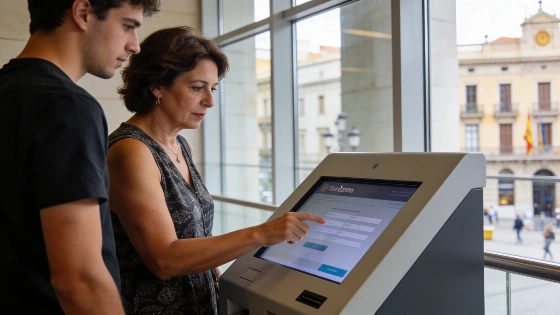
The city’s digital transformation has been central to this surge. Sixty percent of all procedures are now completed online, far outpacing in-person (25%) and telephone (15%) channels. This shift is largely attributed to the Barcelona Fácil Plan, which in the past year alone has digitized 33 previously paper-based processes. Among the new digital services are online renewals for foreign residents’ registration and installment payment options for municipal bills. Nearly 300 procedures now offer real-time chat support, further streamlining the experience for users.
Despite the increased workload, public satisfaction with municipal services remains high. In-person offices received an average rating of 9.1 out of 10, while the free 010 telephone service scored 8.7. The Virtual Office for Procedures, though slightly lower at 7.7, is being improved through the simplification of more than 40 forms to enhance usability. Valls emphasized that the city’s strategy aims to position Barcelona as Spain’s leading technology capital, with a focus on transparency, speed, and citizen-centric administration.
Barcelona’s approach to digitalization stands out in the broader context of urban renewal and modernization. For example, the city’s ongoing transformation of the Montjuïc fairgrounds, which includes major redevelopment and new housing, reflects a similar commitment to innovation and service improvement, as detailed in recent coverage of the Montjuïc redevelopment project.
In Spain, the digitalization of public administration has become a national priority, with cities like Barcelona leading the way. The rapid adoption of online services not only reduces paperwork and waiting times but also increases accessibility for residents. As more procedures move online, municipalities are investing in user-friendly platforms and support systems to ensure that all citizens, including those less familiar with technology, can benefit from these changes. The trend is expected to continue as local governments respond to growing demand for efficient, transparent, and accessible public services.