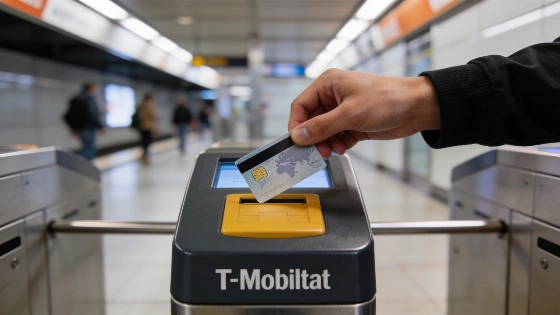
Barcelona’s transport authority plans to enable direct credit card payments across metro, rail and more buses in 2027. The move targets tourists and occasional users, changing how single tickets are bought and validated.
Barcelona is preparing a major shift in public transport access: by 2027, direct payment with bank cards is set to become available not only on city buses, but also across the metro and rail networks. The Autoridad Metropolitana del Transporte (TMB) confirmed that the system, already in use on buses since 2022, will be extended to cover the entire urban network, including those bus lines and stations where card payments are not yet possible.
The new system will allow passengers to purchase and validate single tickets simply by tapping their credit or debit card on T-Mobilitat terminals. This change is designed primarily for occasional users, visitors and tourists, who often rely on single-use tickets and may not have local transport cards. According to the ATM, the introduction of card payments will not affect regular commuters or those using multi-journey passes, as these remain unchanged.
To implement the upgrade, the ATM—comprising the Generalitat, Barcelona City Council and the Metropolitan Area—has launched a tender for banking services and a payment platform. The goal is to ensure seamless integration of the new system, which is already standard in several major European cities. The technical requirements specify a maximum of three months from contract signing to full integration, testing and certification, though the actual rollout will depend on successful completion of all phases.
While the system will initially support only single tickets, the ATM notes that further development is needed to recognize journeys across different fare zones, which could result in higher costs for users traveling beyond central areas. The single ticket purchased via card will remain personal and will not allow transfers between different modes of transport, unlike existing travel passes.
Barcelona’s move reflects a broader trend in European urban mobility, where contactless payments are becoming the norm for public transport. The T-Mobilitat platform, central to this transition, has been gradually expanding its capabilities since its introduction. For tourists and infrequent riders, the convenience of tapping a card instead of buying paper tickets is expected to simplify access and reduce queues at ticket machines. However, for daily commuters, the established subscription-based passes continue to offer better value and flexibility.
As of 2026, most major Spanish cities have begun adopting similar payment technologies, but Barcelona’s integration of metro, rail and bus under a unified card system marks one of the most comprehensive efforts in the country. The ATM’s approach aims to balance innovation with the needs of different user groups, ensuring that the transition is smooth and that regular passengers are not affected by the changes. The expansion is also expected to support the city’s tourism sector, making public transport more accessible for international visitors.