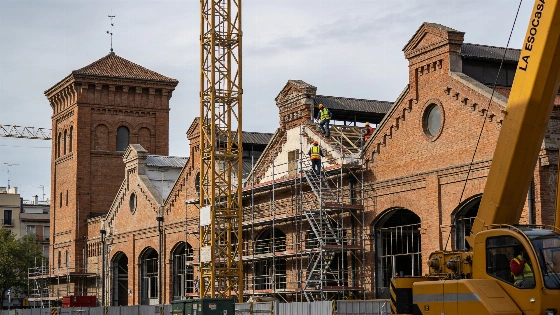
Barcelona will overhaul the former La Escocesa industrial site in Poblenou. The city and private partners will invest €52 million to create housing, cultural spaces, and social initiatives. Completion is planned for 2029.
The Barcelona City Council has approved a €52 million redevelopment plan for the historic La Escocesa complex in Poblenou, aiming to turn the former industrial site into a hub for housing, culture, and social inclusion. The project, announced by Mayor Jaume Collboni, will see the city contribute half of the funding, with the remainder coming from public and private entities, including cooperatives and foundations. The initiative marks a significant shift for the 11,500-square-metre property, which has stood largely unused since its acquisition by the city in 2017.
Located on Pere IV street in the 22@ Nord district, La Escocesa currently hosts only an artistic creation centre. Under the new plan, the site will be rehabilitated to accommodate a mix of uses: residential units, cultural venues, employment and training centres, and research facilities focused on food innovation. The city expects the redevelopment to generate up to 500 jobs, both directly and indirectly, as new activities take root in the area.
Key partners in the project include Mercabarna, the Generalitat, and the Ampans Foundation, which specialises in supporting people with disabilities. The plan foresees long-term concessions of up to 40 years for private investors, but at rates well below market prices for the district. The Johnston and Foseco buildings will continue to serve as spaces for artistic creation and residency, maintaining the current community of 30 resident artists and 40 members using shared facilities. Meanwhile, the Steegmann Birkhead and Paul buildings will be converted into an innovative inclusion centre managed by Ampans, offering 72 housing units for people with disabilities, employment programmes, and an inclusive art centre.
The Klein building is set to become a hub for the social and solidarity economy, with a focus on the ecological transition, while the Shield building will house the Barcelona Foodlab, dedicated to agri-food technology innovation. Deputy Mayor Raquel Gil highlighted the project's unique combination of public and private investment, stressing that participating entities are required to contribute to both the viability and the rehabilitation of their respective projects.
La Escocesa has a long industrial history, having produced textiles and chemicals until the 1980s, and later operating as a worker cooperative until the late 1990s. The site was preserved thanks to local community pressure before being purchased by the city. In recent decades, like many industrial spaces in Poblenou, it was subject to illegal occupation, with the last squatters removed by the city in October of the previous year.
The transformation of La Escocesa is seen as a key step in revitalising the less developed northern section of the 22@ technology district, where several new office buildings remain under-occupied. The project is expected to serve as a model for socially oriented urban development in Barcelona, reflecting a broader trend towards mixed-use regeneration of former industrial areas. According to public records, the city’s approach aligns with ongoing efforts to balance economic growth, social inclusion, and affordable housing in rapidly changing urban districts.