The Barts festival opened with Beat, a supergroup featuring ex-King Crimson members. Technical problems and an unusual setlist shaped the night. The audience's reaction shifted after a challenging start.
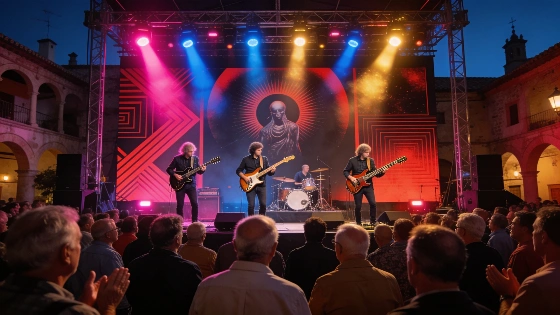
The launch of the Barts festival at Poble Espanyol in Barcelona drew attention with the debut of Beat, a supergroup formed by two former King Crimson members, Adrian Belew and Tony Lewin, joined by acclaimed musicians Steve Vai and Danny Carey. The event, which attracted 3,600 attendees—predominantly male and older, reflecting King Crimson's traditional fanbase—stood out for its attempt to reinterpret the legacy of the legendary British band without the direct involvement of Robert Fripp.
From the outset, the concert promised a blend of tribute and innovation. The first half opened with energetic renditions of "Neurotica" and "Neal Jack And Me," capturing the intricate guitar work and chaotic energy characteristic of King Crimson's 1980s era. Adrian Belew's vocals on "Heartbeat" evoked a Talking Heads influence, a nod to his background with David Byrne's band. However, the setlist soon shifted to rarely performed tracks like "Model Man," "Dig Me," and "Man With An Open Hear," which had seldom, if ever, been played live with Fripp. These dense, experimental pieces, combined with notably low sound levels—prompting complaints from veteran fans—left the audience hesitant and searching for the familiar intensity of past performances.
The atmosphere changed after the intermission. Improved sound and a focus on material from the album "Discipline" brought renewed energy. "Waiting Man" received enthusiastic applause, followed by the spiritual "The Sheltering Sky" and a standout performance by Lewin on the Chapman Stick. Steve Vai, initially restrained, became more prominent during "Frame by Frame," balancing technical prowess with subtlety. Danny Carey, known for his complex drumming with Tool, added dynamic rhythms, while Belew's guitar work shone on "Elephant Talk," mimicking elephant calls and driving the tempo forward. The second half's vitality was further highlighted when the band encouraged the audience to clap along during "Sleepless," an unusual gesture for a King Crimson-related show.
The concert concluded with "Red," a track outside the main trilogy featured that night, and "Thela Hun Ginget," which brought a tribal spirit to the finale. The event demonstrated how Beat could channel the essence of King Crimson without replicating it, offering both nostalgia and reinterpretation. This approach to legacy acts and supergroups echoes trends seen at other major concerts in Barcelona, such as Alejandro Sanz's recent performance, where audience engagement shifted dramatically after a slow start, as detailed in this report on Alejandro Sanz's RCDE Stadium show.
King Crimson, formed in 1968, is widely regarded as a pioneer of progressive rock, known for its ever-changing lineup and experimental sound. The band's influence extends across genres, and its members have often collaborated with other prominent artists. Supergroups like Beat continue to attract audiences by blending established legacies with new interpretations, reflecting a broader trend in live music where tribute and innovation coexist. The Barts festival's decision to open with such a project signals a commitment to both honoring musical history and exploring fresh directions within Spain's vibrant concert scene.