A wildfire near Bédar has killed 12 residents and left the town nearly deserted. Survivors struggle to return to daily life amid devastation. Authorities continue searching for victims as the community faces an uncertain future.
The town of Bédar in Almería is reeling after a wildfire swept through its outskirts, claiming the lives of 12 residents and transforming the once lively streets into a scene of silence and emptiness. On Saturday, only about fifty people remained in the urban center, while most surrounding hamlets had been evacuated. The disaster has left locals questioning the future of their community, with many businesses shuttered and daily routines disrupted.
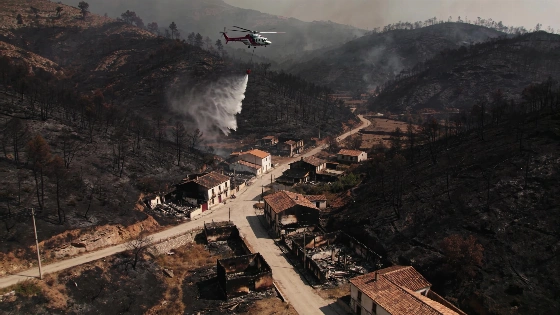
Rodrigo, a local restaurant owner nearing retirement, was seen carrying bread to his establishment, El Paso, as helicopters continued to douse hotspots on the nearby hills. The fire, which began Thursday afternoon after a power line fell—an incident now under police investigation—spread rapidly due to strong winds. The flames forced a late-night evacuation, with some residents initially fleeing toward Los Gallardos before being redirected to Lubrín as the main road became impassable.
Inside Bédar, the atmosphere is heavy with loss. Cafés and the supermarket serve as rare gathering points for those who stayed behind, many of whom speak in hushed tones, still processing the scale of the tragedy. The church square, medical center, and narrow streets lined with flowering bougainvillea remain deserted. Ash drifts through the air, and the only sounds are the distant hum of firefighting aircraft and the occasional birdsong.
From the miners’ monument on the edge of town, the devastation is stark: blackened hillsides, charred homes, and only a handful of buildings left standing. Over 6,000 hectares have been burned, according to Antonio Sanz, the regional government’s presidency minister. The fire’s impact has been compared to a living nightmare by residents, some of whom lost friends and neighbors in the chaos. The owner of the local supermarket, Javier, expressed frustration over the evacuation process, believing the urban center was safe and that confusion over escape routes may have contributed to the tragedy.
Authorities, including the Guardia Civil, continue to search for additional victims in isolated homes and rural paths, marking checked locations with yellow Xs. The smell of smoke lingers, and small fires still smolder in the undergrowth. Some residents, like a Dutch woman who returned briefly to check on her house, have risked police checkpoints to retrieve belongings or assess damage. The sense of community remains strong, but the loss is deeply felt, especially among foreign residents who had become part of village life.
Local business owners are now worried about the future. Restrictions on clearing dry vegetation and dead trees have long been a point of contention, with some arguing that such policies made the area more vulnerable to fire. The economic impact is already visible, as tourism and hospitality face an uncertain recovery. Rodrigo, whose restaurant and apartments had previously thrived, now fears for the survival of his business and the town itself.
This tragedy in Bédar echoes the deadly consequences seen in other recent wildfires in the region. For example, a similar incident in Los Gallardos resulted in multiple fatalities after residents took a dead-end evacuation route, as detailed in a related report on the Los Gallardos wildfire. Such events highlight ongoing challenges in emergency planning and rural safety across Almería.
Wildfires are a recurring threat in southern Spain, particularly during periods of high temperatures and drought. The combination of dry vegetation, strong winds, and limited access routes can quickly turn small incidents into major disasters. In recent years, authorities have increased investment in firefighting resources and public awareness campaigns, but the events in Bédar underscore the persistent risks faced by rural communities. As recovery efforts continue, the focus will remain on supporting survivors, restoring essential services, and reassessing local emergency protocols to prevent future tragedies.