Bilbao BBK Live celebrates two decades, now drawing 115,000 visitors and €23.6 million in economic impact. The festival’s evolution highlights its deep ties to the city and new focus on sustainability.
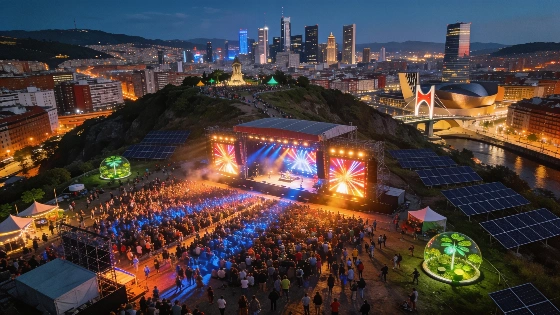
Bilbao BBK Live, one of Spain’s most prominent music festivals, has reached its 20th anniversary, underscoring its transformation from a local event into a major European cultural reference. The festival’s growth has paralleled Bilbao’s own urban renewal, with both now seen as symbols of the city’s international ambitions and community spirit.
This year, the festival expects to match or exceed the 115,000 attendees recorded in its previous edition, with more than 40% coming from the Basque Country. The event’s economic footprint is significant: according to the Bilbao City Council, last year’s festival generated €23.6 million, benefiting hospitality, retail, transport, and accommodation sectors. Around 3,500 people were employed in logistics, technical services, security, and catering, reflecting the festival’s role as a major employer during its run.
Organisers from Last Tour, led by CEO Yurdana Burgoa, attribute the festival’s longevity to a blend of artistic consistency, adaptability, and a strong connection to the local community. The festival’s integration with the city has deepened in recent years, with free concerts and cultural activities now spread across Bilbao and Bizkaia. This approach aims to address long-standing concerns that economic benefits were previously concentrated at the Kobetamendi site and official camping area, rather than reaching the wider urban fabric.
Municipal support remains crucial, though the city’s financial contribution has decreased to €1.2 million this year, down by €500,000 from the previous edition. City officials, including Kontxi Claver, councillor for Economic Development, Commerce, Tourism and Employment, say this reflects the festival’s maturity and growing sponsorship base. The city’s role now focuses on facilitating logistics, safety, waste management, and coordination across more than 20 municipal departments. New this year is a tool to assess the economic, social, and environmental impact of large events, with part of the public funding now tied to sustainability and labour standards.
Sustainability has become a central pillar for Bilbao BBK Live. The festival site at Kobetamendi serves as a testing ground for new technologies, including the introduction of 11 smart solar trackers this year. These devices, equipped with machine learning algorithms, optimise solar energy collection by adjusting to real-time environmental conditions. Last year, a combination of solar power, batteries, and renewable fuels supplied electricity equivalent to the daily consumption of 30 Spanish homes, powering one of the main stages and its surroundings. The rest of the festival relies on nearly 30,000 litres of renewable fuel, reducing CO2 emissions by over 100 tonnes compared to traditional fossil fuels.
Maintaining local identity remains a priority for Last Tour, which continues to operate as Spain’s largest independent promoter with predominantly Basque ownership. Despite interest from international investors, organisers insist that the festival’s essence is rooted in its connection to Bilbao and its community. This commitment is seen as essential to the event’s character and ongoing relevance.
The festival’s story is mirrored in the experiences of attendees like Maider Agirre, who first attended in utero during the inaugural 2006 edition and now returns as a young adult. Her journey reflects the generational ties that have formed around the event, reinforcing its place in the city’s cultural calendar. This sense of shared history is not unique to Bilbao; similar milestones have been observed elsewhere in Spain, as seen in the case of the Thyssen-Bornemisza twins, whose evolving legacy was recently highlighted in a feature on family and cultural heritage.
Bilbao BBK Live’s evolution over two decades illustrates how cultural events can drive urban transformation, foster economic growth, and strengthen local identity. The festival’s ongoing efforts in sustainability and community integration position it as a model for other large-scale events in Spain and beyond. As both the city and the festival look to the future, their intertwined development continues to shape Bilbao’s reputation as a leading destination for music and culture.
For context, Bilbao’s transformation began in the 1990s with major urban projects like the Guggenheim Museum, which helped reposition the city internationally. The success of Bilbao BBK Live has further cemented this image, attracting visitors from across Europe and contributing to the city’s economic and cultural vitality. The festival’s focus on environmental innovation and local engagement is increasingly seen as a benchmark for sustainable event management in Spain.