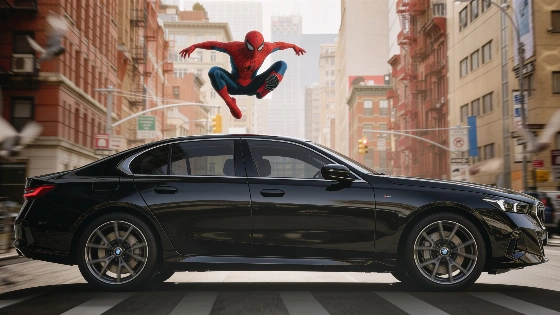
BMW has sparked controversy by displaying a Spiderman movie trailer on the infotainment screens of its latest cars. Many owners see this as an unwelcome intrusion of advertising into their vehicles, raising questions about the future of in-car marketing.
BMW has ignited a heated debate among drivers after introducing a Spiderman movie trailer directly onto the multimedia screens of its newest vehicles. The move, which coincides with the global release of 'Spiderman: Brand New Day', has left many owners frustrated by what they see as an unexpected and intrusive form of advertising inside their cars.
The campaign, which began on July 27 and is set to run until August 10, targets BMW models manufactured after July 2020 in more than 70 countries, including Spain. According to reports from outlets such as Autoweek, the promotion appears as a banner on the infotainment system, inviting users to watch the film's trailer. If the screen is touched, the trailer automatically plays in full, pausing any audio and switching the car's ambient lighting to match the video.
BMW maintains that the banner is optional and that drivers can choose whether or not to view the trailer. However, many users disagree, arguing that the ad is difficult to avoid and disrupts their experience. Some have reported that the system even offers to save the trailer as an app for later viewing, further blurring the line between entertainment and advertising.
For years, car manufacturers have debated the ethics and practicality of introducing advertising into vehicle interiors. Until now, BMW had publicly opposed the idea, stating in 2023 that the inside of a car was not an appropriate place for ads. The current campaign has led many to accuse the company of breaking its own promises and prioritizing commercial interests over customer experience.
On social media and forums, owners have voiced their frustration, with some questioning why they should pay between €50,000 and €100,000 for a car only to be subjected to in-car marketing. One user sarcastically asked if drivers would soon need an 'adblocker' for their vehicles.
BMW's partnership with the Spiderman franchise marks a shift in automotive marketing. Previously, Audi was the only car brand featured in the Marvel universe, but BMW's prominent role in the latest film has clearly influenced its decision to launch this campaign. The backlash, however, suggests that many drivers are not ready to accept advertising as part of their daily driving experience.
As digital technology becomes more integrated into vehicles, the question of how much control manufacturers should have over in-car content is likely to become even more pressing. For now, BMW's experiment has reopened the debate about the boundaries between entertainment, advertising, and personal space on the road.
Context: In-car advertising is a growing trend as automakers seek new revenue streams from connected vehicles. While some brands have experimented with sponsored content or subscription-based features, direct advertising on infotainment screens remains controversial. The outcome of BMW's campaign may influence how other manufacturers approach this sensitive issue in the future.