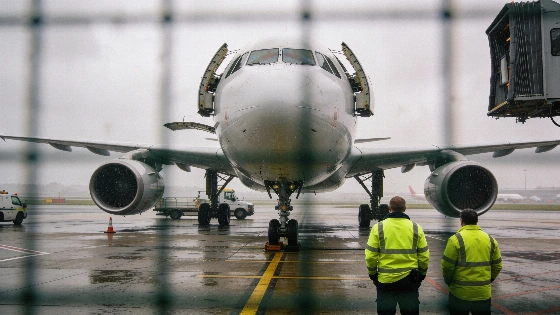
British Airways flight BA295 descended from about 37,000 feet to 9,000 feet over Ireland after a technical problem. The Boeing 777-200ER declared an emergency and returned to Heathrow after 4 hours and 47 minutes in the air.
At about 11:50 local time, British Airways flight BA295 left Terminal 5 at Heathrow for Chicago O'Hare. The Boeing 777-200ER later declared an emergency over Ireland and turned back toward London.
FlightAware and Flightradar24 data showed the aircraft had climbed to roughly 36,000 to 37,000 feet. It then descended to about 9,000 feet in several minutes. The flight had been scheduled to last about eight hours and 40 minutes.
The aircraft involved was Boeing 777-200ER G-VIIA, operating British Airways flight BA295 from Heathrow to Chicago O’Hare.
The aircraft was registered as G-VIIA. Instead of continuing across the Atlantic, it reversed course over Ireland and dropped roughly 27,000 to 28,000 feet.
That was a controlled descent.
The tracking data does not show a crash, free fall or loss of control. The figure of 28,000 feet equals approximately 8,530 metres, but the available information does not identify the system that caused the problem.
British Airways said the aircraft landed safely after its pilots decided to return to Heathrow. Passengers left the plane normally. Airline teams then worked on new travel arrangements for them.
The airline did not name the technical fault. It also did not say when the Boeing 777 would return to service.
The flight transmitted transponder code 7700. That is the internationally recognised signal for a general emergency.
As CBS News and other reports noted, code 7700 confirms that an emergency was declared. It does not identify the failed system. The available information also does not confirm speculation about depressurisation or another specific fault.
After turning back over Ireland, BA295 remained in the area for several hours before landing at Heathrow approximately four hours and 47 minutes after departure. The reason for the extended time in the air has not been officially disclosed, so it should not be attributed solely to fuel burn.
The long return also needs careful reading. British Airways linked the decision to return to a problem on the aircraft itself. That is separate from criticism of the United Kingdom's air traffic control system.
The National Air Traffic Services, known as NATS, has faced criticism after major disruptions to British aviation. At the beginning of September, almost 2,000 flights were canceled after a technical failure hit the system used to process flight plans.
NATS is the provider responsible for British air traffic control.
Another disruption came months earlier. A fire at an electrical substation caused a power outage that affected more than 1,300 flights.
Those events provide wider operational context. The available information does not connect either NATS failure to the British Airways aircraft's technical problem.
For passengers, the immediate result was a missed transatlantic journey and a new travel arrangement after a safe landing. For the airline, the incident turned a scheduled flight into a lengthy return operation.
The descent looked dramatic. The reported sequence was controlled: the pilots declared an emergency, turned back and brought the passengers to the ground at Heathrow.
The two issues remain separate. BA295 suffered an aircraft problem that ended without reported harm. The NATS failures affected thousands of flights at other times.
Combining them would go beyond the evidence. Ignoring the wider record would leave out relevant pressure on British aviation.
The crew contained the immediate risk, according to the available information. The technical cause and the aircraft's next operational status remain unspecified.
No independent report available here records injuries, aircraft damage or conclusions from aviation regulators.