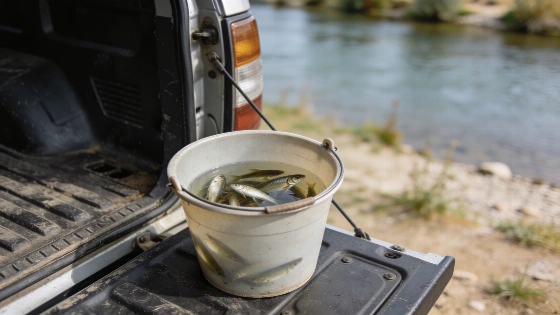
Most of the 1,861 fish found in a car in Burgos were dead, while others were in poor condition. The Guardia Civil says the fish had been taken from the River Arlanza through mass, non-selective capture. Europa Press reported the investigation on 4 November 2026.
The vehicle was stopped in June at a preventive checkpoint in a municipality in the Arlanza area. Officers from the Covarrubias Guardia Civil post inspected its boot and found a bucket containing the small fish. Their condition, including damage to the gills and eyes, led officers to suspect they had recently been caught illegally in nearby water.
Seprona officers from the Burgos Command established that the fish came from the Arlanza. The driver, a 37-year-old man and the vehicle’s only occupant, said he intended to use them as live bait for sea fishing. A rejoncillo was also found beside the bucket. The fishing device can hold fish alive, but can also be used for indiscriminate catches: placed in a current, it traps fish drawn inside by bait and keeps them from returning to the river.
The fish were taken to the Junta de Castilla y León’s Centro de Recuperación de Animales Silvestres (CRAS) in Albillos for counting and identification. The Guardia Civil said 1,860 were native species and one was the non-native percasol. The native fish included piscardos and gobios, as well as cachos and bermejuelas; the bermejuela is listed under Spain’s Listado de Especies Silvestres en Régimen de Protección Especial.
An expert report by Seprona’s Grupo de Periciales Ambientales concluded that the mass, non-selective extraction had seriously altered the river’s ecological balance and caused significant damage to the natural environment. The Guardia Civil treated the case as a suspected offence against flora and fauna. The man was referred to the court in Lerma, and no conviction is reported. The case is separate from the Guardia Civil investigation into a cocaine seizure in Águilas.