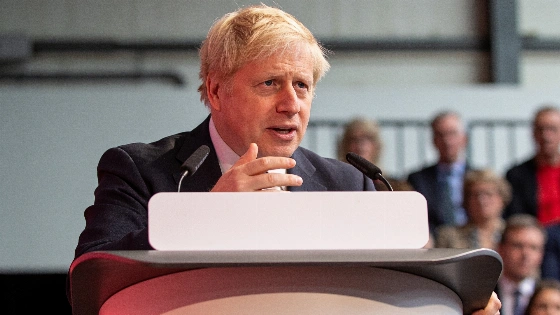
Andy Burnham says Brexit has harmed Britain more than it helped. His government will examine every future option with Brussels, including renewed EU membership.
At Labour's conference in Liverpool, Andy Burnham said Britain should examine every option for its future relationship with the European Union. The choices include keeping the current post-Brexit settlement, joining a customs union, returning to the single market or seeking full EU membership. No application to rejoin has been approved.
That is the gap. Burnham has opened a political question, not started an accession process. The government has set no timetable for re-entry. He has called a referendum or renewed membership a distant prospect, not an immediate policy goal.
Burnham has said that a referendum or full re-entry into the EU would be a distant prospect, underscoring that the current initiative is a review of policy options rather than an accession bid.
Burnham spoke to the BBC on Wednesday 30 September. He also addressed Labour's annual conference in Liverpool the previous day. He said Brexit had done more harm than good.
Reuters reported that he tied the wider review to the future UK-EU summit. The government is considering the long-term relationship it wants with European partners. It is also trying to move beyond the uncertainty surrounding Brexit's consequences.
Burnham backed remaining in the EU during the 2016 referendum. He now says the promised recovery of national control has not produced the results claimed by Brexit supporters. He pointed to economic weakness and difficulties in managing immigration. The Guardian and France 24 also reported his central claim that Brexit had brought more harm than benefit.
The planned UK-EU summit is expected at the end of November. According to Reuters, it is intended to provide a point at which the British government can set out options for the country's long-term relationship with the bloc.
Four broad routes are under consideration. One would keep the current arrangements and avoid a return to EU structures. A customs union would bring closer trade coordination and a common tariff policy towards countries outside the bloc.
Returning to the single market would create deeper economic integration. It could also require Britain to accept EU rules and further commitments linked to the free movement of people.
Full membership reaches furthest. Burnham has not ruled it out, but he has offered no formal proposal or schedule. Reuters reports that he has also kept open the options of a customs union and the single market. Each route still needs a political and economic assessment.
Labour's new position goes beyond its 2024 election platform. The party ruled out a return to the single market, the customs union and free movement of people at that time. Burnham's review could test those limits. They have not been formally abandoned.
Brussels would set conditions too. French President Emmanuel Macron welcomed the prospect of a British return during his visit to Madrid. He warned that the United Kingdom could not choose only the benefits it wanted from EU membership. Earlier reporting covered his response.
A new accession would not automatically restore the special arrangements Britain held before Brexit. Member states and EU institutions would have to negotiate the terms. Previous exemptions might not survive.
Public opinion gives Burnham room to test the argument. It does not give him a blank mandate. A YouGov poll conducted on 2 and 3 June 2026 found that 55% supported Britain returning to the EU. Another 34% opposed it. Support for closer ties without membership stood at 59%.
The numbers shift when the conditions become less favourable. In another YouGov study, support for rejoining fell to 35% if Britain could not keep its previous exceptions. In that scenario, 43% opposed rejoining. Only 39% said EU membership should be an immediate government priority.
Labour could find support for the proposal among parties that favour closer relations with Brussels. The Liberal Democrats and the Scottish National Party are among them. The Conservatives and Reform UK oppose a return.
Reform leader Nigel Farage has attacked Burnham's decision to reopen the European question. He blamed the Labour government for Britain's economic problems. Reuters and other reports have pointed to the risk of new divisions between pro-European and Eurosceptic forces.
The UK-EU summit planned for November could give Burnham his first major setting to explain which options he considers workable. Labour's election commitments would still constrain any fundamental change. Internal opposition would remain, and the government would need enough support before negotiations could start. General elections are scheduled for mid-2029 unless called earlier.
Ten years have passed since the referendum. Britain is not preparing to rejoin the EU. The prime minister has moved membership from an excluded outcome to an option for government review.
The debate can now focus on terms and trade-offs. Burnham has created political space for a closer relationship with Europe. The facts still point to a measured reading: Britain is reviewing its choices, not returning to the EU.