

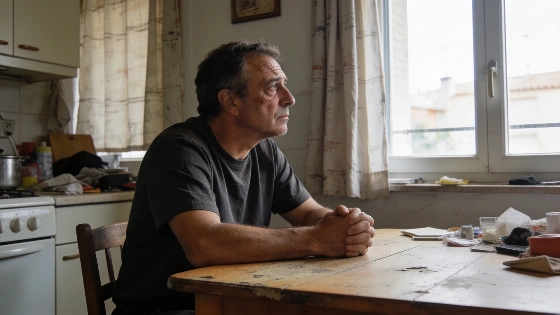
A 41-year-old former bus driver in Catalonia has secured a full disability pension after a court ruled his psychiatric condition prevents him from holding any job. The decision highlights how Spanish law distinguishes between partial and absolute incapacity.
A 41-year-old self-employed bus driver in Catalonia has been granted a permanent absolute disability pension of €2,522.69 per month, after the region's Superior Court of Justice (TSJ) determined his psychiatric deterioration made it impossible for him to maintain any form of employment. The ruling, which is still open to appeal before the Supreme Court, underscores the legal and medical complexities surrounding disability benefits in Spain.
The man had previously been recognized as having a permanent total disability since November 2020, which barred him from driving professionally due to addiction-related disorders but did not exclude him from all types of work. In 2023, he requested a review of his status, citing a worsening of his condition. The National Social Security Institute (INSS) twice rejected his request, arguing there was no significant aggravation. After exhausting administrative channels, he turned to the Social Court in Barcelona, which in 2025 ruled in his favor and upgraded his status to absolute incapacity.
Court documents described a marked decline in his mental health, including active depressive symptoms, obsessive anxiety, suicidal thoughts, and severe cognitive impairment linked to both his illness and medication. The evidence also pointed to social withdrawal, confinement at home, loss of autonomy, and profound difficulties with concentration. These symptoms, according to the court, affected not only his ability to work but also his personal care and social interactions.
The INSS appealed, arguing that the former driver could still perform light, sedentary, and non-hazardous tasks, and pointed to medical reports indicating several months of abstinence from addictive substances. However, the TSJ rejected this argument, emphasizing that the legal standard for absolute incapacity is not whether a person can perform isolated tasks, but whether they can sustain any job with continuity, dedication, and effectiveness. Given the chronic and severe nature of his condition, the court concluded he was unfit for any profession.
Under Spanish law, absolute permanent disability entitles recipients to 100% of their regulatory base as a lifelong pension, subject to periodic review if there is evidence of improvement, worsening, diagnostic error, or unauthorized employment. In this case, the regulatory base was set at €2,522.69 per month. The court stressed that this outcome does not mean all individuals with bipolar disorder automatically qualify for absolute disability; the decisive factor is the proven impact of the illness on the person's ability to work. Pension amounts also vary depending on each individual's regulatory base.
When the decision was made public in May 2026, the ruling was not yet final, as the INSS retained the right to appeal to the Supreme Court for a unification of doctrine. As such, the case should be seen as a specific judicial outcome rather than a precedent-setting rule for all similar cases.
This case follows other recent disability rulings in Spain, such as the decision involving a hotel worker in Benidorm who was awarded a pension after vision loss left her unable to work, as reported in a previous court case covered by russpain.com. Together, these cases illustrate the nuanced approach Spanish courts take in evaluating the real-world impact of medical conditions on professional life.



