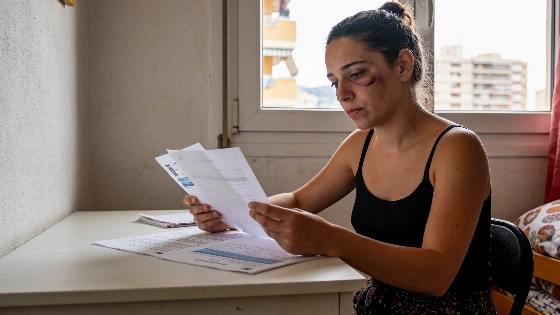
A 31-year-old hotel activity monitor in Benidorm has secured a €574 monthly disability pension after a court confirmed her vision problems prevent her from safely performing her job. The ruling highlights how medical limitations can impact professional duties in Spain.
A 31-year-old woman who worked as an activity monitor at a four-star hotel in Benidorm has won a legal battle for disability benefits after severe vision loss left her unable to continue in her profession. The Superior Court of Justice of the Valencian Community (TSJCV) has upheld her right to a permanent total disability pension, rejecting an appeal from the National Social Security Institute (INSS).
The court's decision, dated June 30, 2026, confirms an earlier ruling by the Social Court No. 2 of Benidorm. As a result, the woman will receive a monthly pension of approximately €574, retroactive to August 21, 2023. The case centers on her diagnosis of high myopia, macular and vitreous damage, and a retinal detachment in her left eye. Despite undergoing multiple surgeries, including a vitrectomy and scleral buckling, her visual acuity remains significantly impaired, ranging between 0.3 and 0.4 according to forensic reports.
Medical Evidence and Job Safety
The INSS initially argued that her eye conditions did not prevent her from performing the essential tasks of her job. However, the court found that her medical restrictions—such as avoiding sudden movements, heavy lifting, prolonged sun exposure, and certain physical activities—directly conflicted with her responsibilities. Her role involved supervising children and adults, organizing activities in and around the pool, and setting up recreational equipment, all of which require reliable vision and quick reactions.
Medical experts also advised against driving and warned of the risk of further deterioration. The court emphasized that expecting the worker to compensate for her limitations with extra effort was unreasonable, especially given the potential risk to others' safety. The ruling noted that reduced vision could compromise her ability to monitor groups and respond to dangerous situations, making her unfit for her usual profession.
Scope of the Disability Ruling
The court did not grant her absolute permanent disability, which would prevent her from working in any field. Instead, she was recognized as permanently and totally disabled for her specific occupation as a monitor. Under Spanish law, this status allows her to seek employment in other roles compatible with her medical limitations. The pension amount, typically 55% of the regulatory base, reflects this distinction and may be combined with other work if suitable opportunities arise.
Legal and Social Context
The TSJCV's decision follows a pattern in Spanish courts of closely examining how medical conditions affect the actual duties of a profession, rather than applying a generic standard. Similar cases have involved workers in roles where physical or sensory limitations pose risks to themselves or others, such as seamstresses and security guards. The ruling underscores the importance of matching disability assessments to the real demands of each job.
According to the information available, the judgment is not yet confirmed as final, and further appeals may be possible. The case highlights the complexities of Spain's disability system and the challenges faced by workers whose health issues intersect with public safety and professional standards.