Pablo Bustinduy used a TVE interview to attack Junts per Catalunya and investment funds. The housing crisis is now at the centre of a sharper fight over Spain’s next election.
Junts per Catalunya left the investiture bloc and said it would vote against two housing measures from Pedro Sánchez’s government. The decision came after a leadership meeting. Junts wants the Cabinet to withdraw the texts and submit them again with changes.
The timing matters. Housing has become one of Spain’s hardest political problems.
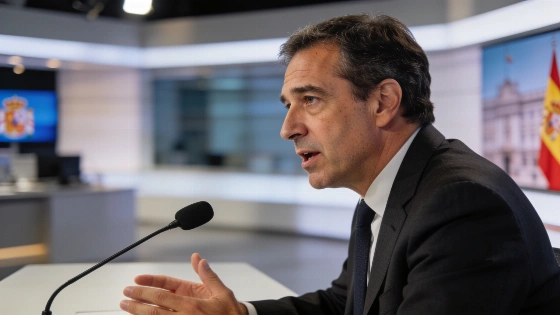
Pablo Bustinduy used an appearance on La Hora de La 1 on TVE to answer the move. The minister of Derechos Sociales, Consumo y Agenda 2030 blamed investment funds for the pressure on housing. He also attacked Junts and presented the dispute as a test of political loyalties.
His interview with Silvia Intxaurrondo offered no institutional compromise. Bustinduy argued that every parliamentary group must show which side it supports. The message was aimed at the Government’s political base as much as at Junts.
The two housing measures include automatic extensions of rental contracts and compensation for tenants when a landlord ends a contract without a legally recognised reason.
The two measures concern rental contracts and tenant protection. One would bring automatic extensions of rental contracts. The other would require compensation for a tenant when a landlord ends a contract without a legally recognised reason.
Junts says the decrees could reduce the supply of housing and make access harder. The party also says they fail to give vulnerable tenants enough protection. It has questioned whether the state would provide sufficient guarantees for the compensation system.
That is the core dispute.
Junts sees a risk to supply. The Government says stronger tenant protection is needed. The two sides have not agreed on whether both goals can be achieved at once.
Bustinduy shifted responsibility onto the parties opposing the decrees. He warned that those who vote against them would accept responsibility for future evictions. He also demanded that they identify themselves in public.
In comments carried by RTVE, the minister described the vote as a moral and political choice. He did not treat it as a routine legislative disagreement. A rejection, in his framing, would show support for property interests.
Between 2015 and 2025, housing purchase prices in Spain rose by about 80% and rents by 87%, while nominal wages increased by roughly 30%. The comparison helps explain why housing has become a central electoral fault line.
The figures explain why the argument has spread beyond Congress. Between 2015 and 2025, home purchase prices in Spain rose by about 80%. Rents increased by 87%. Nominal wages rose by roughly 30%.
Housing costs moved much faster than pay.
Bustinduy attacked Junts in equally direct terms. He compared the party’s position with the fable of the scorpion and the frog. He accused Junts of putting the interests of rentiers above political sense.
He also accused the PP, Vox and Junts of defending what he called rentismo. That allowed him to combine an attack on a parliamentary partner with a wider criticism of owners and investors.
The minister referred to older women allegedly affected by an abusive businessman. He also mentioned residents connected with the Casa de Alba and others linked to the Arzobispado de la Iglesia. References to the encampment at Puerta del Sol gave the dispute a sharper social charge.
The Government’s record remains part of the argument. After eight years in office, the housing problem has worsened without an effective solution identified in the source material. Bustinduy now presents his side as the sole defender of the right to housing.
That record is difficult to escape.
His promise to do whatever is necessary until the right to housing advances turns an unresolved policy failure into a campaign issue. The latest annual assessment cited from the Banco de España identifies insufficient housing supply as the main reason many households struggle to find a home.
Housing is not the only test for the Government. A separate funding shortfall report described a €44 million deficit across nine public universities in Andalusia. The dispute shows that pressure on public policy reaches beyond the property market.
The political risk is wider still. Spanish media reports have described rising tension in Moncloa and raised the possibility of early elections if the housing measures fall. Those reports do not establish that an election will be called.
They do show the stakes.
A defeat could accelerate the wider political crisis. It could also deepen doubts about the Government’s ability to survive in Congress.
Bustinduy has said the next elections will be a referendum on housing. He wants the crisis to become the main issue for left-wing mobilisation. The TVE interview did not settle the dispute with Junts or create a route back to negotiation.
It changed the political fight.
A defeated housing measure became a test of political identity. That is a strong campaign tactic. It does not solve the shortage of homes, the cost of rent or the lack of a lasting policy. The Government is preparing to fight over responsibility for the crisis. It still has to explain why its years in office have not resolved it.