Stella Li, executive vice president of BYD, asserts the Chinese automaker outpaces Tesla in technology, production, and reliability. Her bold claims come as BYD pushes into Europe and eyes zero-accident autonomous driving.
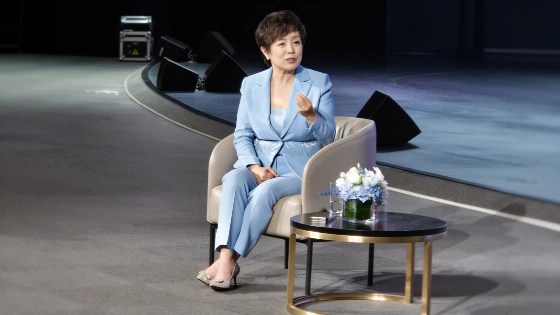
"We do everything better." That’s how Stella Li, executive vice president of BYD, sums up the company’s approach to the global auto industry. In a recent interview in Shenzhen, Li didn’t just praise BYD’s progress—she argued the company delivers on every promise, from battery technology to autonomous driving, and backs it with guarantees that competitors won’t match.
BYD’s growth is hard to ignore. Founded 31 years ago with just 20 employees, the company now employs over a million people, including 120,000 engineers. It has produced 15 million plug-in vehicles, runs factories on six continents, and holds more than 65,000 patents. BYD makes about 70% of its own components, builds its own batteries and chips, and supplies parts for Apple’s iPad and a third of the world’s smartphones.
In August 2026, BYD launched a compensation program in China for users of its God’s Eye navigation system, offering real financial guarantees for those who follow usage guidelines.
While Tesla’s Model Y is still Europe’s top-selling electric car, Li insists BYD’s strength is in execution, not marketing. "We don’t just talk—we deliver," she says. "When we promise intelligent driving, we guarantee it with insurance. No one else in the industry puts money on the table to back their technology."
BYD’s ambitions go beyond sales. The company is betting on a future with zero-accident roads, powered by advanced autonomous systems. Li says BYD’s hardware is already ready for Level 3 autonomy, and the upcoming Denza Z9GT will launch with the most advanced systems available. The main obstacle, she says, is regulatory: "Zero accidents also needs government approval to let us go further with Level 3 and Level 4. The more cars we have on the road, the better our data, and the closer we get to that goal."
BYD’s strategy is straightforward. Unlike German luxury brands that have pulled back on Level 3 autonomy due to low demand, BYD will include the necessary hardware in its vehicles and activate features through OTA updates once regulations allow. "For our customers, it won’t add much cost. They’ll already have experience with the Z9 GT, and when the software is ready, it will enhance their driving even more," Li says.
According to industry reports from August 2026, China is moving to formalize legal responsibility for autonomous driving: proposed amendments to road traffic law would shift liability for accidents involving activated automated driving functions from the driver to the manufacturer or importer. This regulatory shift is expected to accelerate the commercial rollout of Level 3 and Level 4 systems, but also increases compliance costs for automakers.
Geopolitical tensions and rising oil prices have only helped BYD. In markets like Australia and Brazil, sales of BYD’s electric models have tripled in a matter of months as drivers look for ways to save money. "The more people drive our cars, the more they see they can earn more—especially those using them for ride-hailing services like DiDi or Uber. Word spreads quickly in this industry," Li says.
BYD’s technology lineup is broad. In China, the company introduced the Xuanji A3 chip, a 4nm SoC designed for native Level 3 and 4 autonomous driving. But Li says the real goal is a seamless user experience: "We want consumers to feel everything is smooth. They shouldn’t need to understand the tech or AI—just what they feel and want. The car should understand them."
That thinking shows up in features that go beyond what rivals offer. BYD vehicles can float in water, maintain control at high speeds even after a tire blowout, and offer fully autonomous parking at the push of a button. The AI responds to voice commands for comfort, food, or coffee orders—integrating services in a way that, according to Li, American competitors don’t. "In the US, you can’t use voice control to order Starbucks from your car. With BYD, the car works for you."
The company’s Blade Battery, which promises 1,000 kilometers of range and a full charge in nine minutes, will debut in premium models like the Yangwang U7 and Denza Z9 before reaching other BYD vehicles. Expansion in Europe is picking up speed: BYD’s Hungarian plant is increasing production, and the company is open to acquiring or investing in existing European factories.
Li is direct about BYD’s position versus European brands: "I think we’re better. Better in design, better in quality, better in technology." On hydrogen, she says BYD’s R&D teams have the capability but sees it as a niche, not a mainstream solution.
BYD has moved from upstart to global heavyweight in a short time. Its investment in R&D—120,000 people, 52 patents filed every working day—shows a strategy built on scale, speed, and technical depth. The company’s willingness to guarantee its tech with insurance, its push into Europe, and its focus on user experience set it apart from both traditional automakers and Silicon Valley newcomers.
BYD’s rise is not just about manufacturing scale. It’s a bet that the future of mobility will be won by companies that control the value chain, deliver on their promises, and adapt faster than regulators can write new rules. As Li makes clear, BYD isn’t waiting for permission—it’s building the future on its own terms, and the rest of the industry is now trying to keep up.