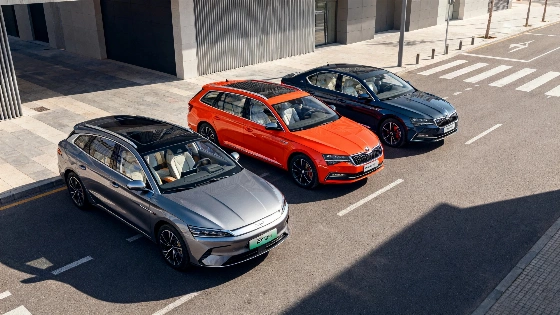
The BYD Seal 6 DM-i and Skoda Superb both offer hybrid power, generous interiors and practical body styles. But their differences in price, space and driving experience could tip the scales for buyers seeking a versatile family car.
Buyers looking for a practical family car in Spain are no longer limited to SUVs. The arrival of the BYD Seal 6 DM-i and the latest generation Skoda Superb brings two strong alternatives, each available as a sedan or estate, both with electrified powertrains and a focus on space and versatility.
BYD Seal 6 DM-i: Value and Efficiency
The BYD Seal 6 DM-i, recently launched, marks a departure from the brand’s usual line-up. Measuring 4.84 meters long and 1.87 meters wide, it offers a choice between sedan and Touring estate bodies. The starting price is €37,000, but with manufacturer and government incentives, it can drop to €29,540.
Inside, the Seal 6 DM-i features a modern dashboard with two digital displays: an 8.8-inch instrument cluster and a 12.8-inch infotainment screen, which grows to 15.6 inches in the top trim. The cabin uses soft-touch materials and offers a solid sense of quality, though rear seat space is more limited compared to its Czech rival.
Boot capacity stands at 491 liters for the sedan and 500 liters for the Touring, which is practical but falls short of the Skoda Superb’s figures. The Seal 6 DM-i is available in three trims—Boost, Comfort Lite and Comfort—all including metallic paint, LED headlights, 17-inch alloy wheels, electric front seats, and a suite of connectivity and safety features as standard.
Hybrid Power and Range
BYD offers two plug-in hybrid versions, both built around a 1.5-liter petrol engine (98 hp) paired with a 197 hp electric motor. Depending on the version, total system output is either 184 or 212 hp, with 0–100 km/h acceleration in 8.9 or 8.5 seconds respectively. Top speed is capped at 180 km/h.
The entry-level model uses a 10.08 kWh battery for up to 55 km of electric range, while the higher-spec version gets a 19 kWh battery, extending zero-emission driving to 105 km. Both versions exceed 1,000 km of total range and support DC fast charging up to 26 kW.
Skoda Superb: Space and Comfort
The fourth-generation Skoda Superb, launched in 2024, is larger than the BYD at 4.91 meters long and 1.85 meters wide, with a wheelbase of 2.84 meters. Prices start at €43,395 for the sedan and €42,250 for the Combi estate, after discounts.
Skoda’s design remains understated, with a traditional dashboard layout and a prominent 13-inch floating touchscreen. Physical controls for climate and a digital instrument panel keep the interface familiar. The Superb’s rear seat space is among the best in its class, and headroom is especially generous in the Combi.
Boot space is a major advantage: 645 liters in the sedan and 690 liters in the estate, comfortably outpacing the BYD. The Superb’s entry-level trim includes 17-inch alloys, LED headlights, electric mirrors, unique upholstery, navigation, and advanced driver assistance systems.
Hybrid Options and Electric Range
The Superb offers a broader engine range, but for a fair comparison, the focus is on its electrified options. The 1.5 TSI mHEV mild hybrid (150 hp) carries an ECO label, while two plug-in hybrid versions (1.5 TSI iV) deliver 204 or 272 hp. The more powerful hybrid is not available with the estate body.
Both plug-in hybrids use a 25.7 kWh battery (19.7 kWh usable), providing between 123 and 130 km of electric range—noticeably more than the BYD. DC charging is supported up to 50 kW. Four trim levels are available: Selection, Plus, Sportline and L&K.
Verdict: Practicality vs Price
The BYD Seal 6 DM-i stands out for its competitive pricing and generous standard equipment, making it an attractive entry point for families seeking a plug-in hybrid. However, it cannot match the Skoda Superb’s interior space, boot capacity or overall comfort on the road.
The Superb, especially in plug-in hybrid form, offers a more refined driving experience, greater electric range and a sense of solidity that places it at the top of its segment. For buyers prioritizing space and comfort, the Skoda remains the benchmark, though at a higher cost.
As the Spanish market continues to diversify beyond SUVs, both models highlight how traditional body styles can still deliver on practicality and efficiency—each with its own strengths and compromises.