Cruise Crisis in the Canaries: Dispute Over ‘Floating Mice’ Nearly Derails WHO Operation. A WHO operation involving 23 countries was jeopardized due to a dispute over the risk of hantavirus infection. The President of the Canary Islands insisted on the theory about rodents, despite denials from the Ministry of Health.
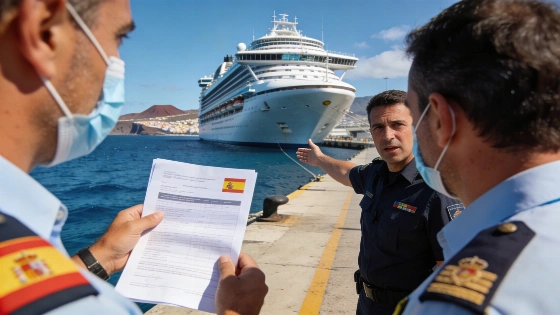
A World Health Organization international operation in the Canary Islands was on the verge of collapse due to an unexpected conflict between regional and central authorities. The President of the Canary Islands, Fernando Clavijo, refused to allow a cruise ship to dock, fearing that rodents on board could spread hantavirus in Tenerife. This stance puzzled Spain’s Ministry of Health and WHO experts, who had already inspected the vessel and found no traces of infection or the presence of mice.
Arguments and correspondence
Lacking any technical reports to substantiate his concerns, Clavijo sent Health Minister Mónica García a screenshot of a search engine AI response that claimed 'mice are excellent swimmers.' He argued that rodents could leave the ship by swimming to shore, even though the vessel had not docked and was anchored offshore. In response, García requested an official technical report from ministry experts and the Coordination Center for Health Emergencies.
Ministry of Health and expert position
In the document prepared by the evening, experts gave a detailed explanation of why the 'floating mice' theory does not hold up to scrutiny. According to their data, the main carrier of the virus — the South American long-tailed mouse (Oligoryzomys longicaudatus) — is found exclusively in the forests of Chile and Argentina, is not present in Europe, and cannot cross large bodies of water. The specialists emphasized that no rodents had been found aboard the cruise ship, which was equipped with modern sanitary protection systems. The leading theory of infection is that passengers came into contact with the virus back in Argentina, and not on the ship or in port.
Political conflict and consequences
Despite receiving the report, Clavijo continued to insist on his position and publicly stated that he was unfamiliar with the document. As a result, the central government decided to take control of the operation and issued an order allowing the vessel to dock. From that point, coordination of the response shifted to Madrid and the WHO, with communication with regional authorities reduced to a minimum. According to the government’s assessment, the risk of new cases is minimal thanks to the measures taken and the absence of rodents on board.
Context and operation details
The situation around the vessel had already attracted media attention and triggered disputes between Madrid and the Canary Islands. Earlier, regional authorities had limited the ship's time anchored off the coast of Tenerife out of concern for residents, as described in the article about the dispute between the Canary Islands and Madrid regarding the disembarkation of HV Hondius passengers. This time, the dispute reached a new level due to unusual arguments and the intervention of artificial intelligence in decision-making.
Following the inspection, experts confirmed that none of the known hantavirus carriers are capable of swimming from the vessel to shore, and sanitary conditions on board meet international standards. The operation for evacuation and monitoring of passengers continues under the supervision of central authorities and the WHO.