Salvador Illa rejects claims of negligence after a subcontractor sparked a major wildfire. Opposition parties accuse the government of double standards on climate and demand accountability. Security and education policies also come under fire.
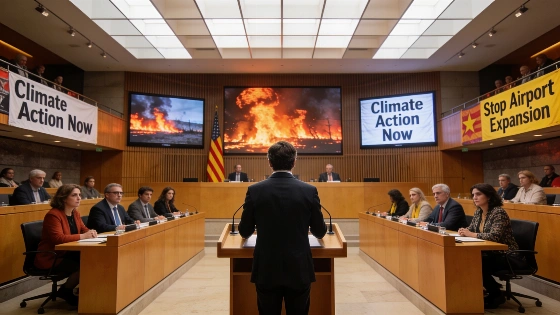
Political tensions erupted in the Catalan Parliament as President Salvador Illa defended his government's handling of recent wildfires, following sharp criticism from opposition parties. The debate was triggered by the Les Gavarres fire, which authorities say was started by a subcontractor using a radial saw near a high-risk area. Junts per Catalunya accused the administration of failing to enforce safety restrictions, arguing that the government cannot shift responsibility to contractors when public safety is at stake.
During the heated session, Junts spokesperson Mònica Sales demanded clarity on who would bear political responsibility for the incident. She highlighted that, despite extreme fire risk, subcontracted workers operated as if under normal conditions, ultimately leading to the blaze. The worker involved has been brought before the courts, but Junts insists that oversight failures rest with the government itself.
Salvador Illa firmly rejected allegations of negligence, pointing to the scale of the challenge: emergency services responded to 65 fires in a single weekend. He also criticized those who downplay the impact of climate change, linking the surge in wildfires to broader environmental threats. The session opened with a moment of remembrance for victims and emergency personnel, as wildfires continued to burn across Catalonia, including an active front in Sentmenat that has already destroyed around 200 hectares.
Climate policy quickly became another flashpoint. Comuns and the CUP accused the government of inconsistency, arguing that its rhetoric on climate action is undermined by support for major infrastructure projects like the expansion of El Prat airport. Xavier Pellicer of the CUP cited the region's focus on large-scale events, while Jéssica Albiach of Comuns warned that emissions could rise by a third if the airport project proceeds. Illa countered by emphasizing recent carbon budget measures and Catalonia's leadership in international wildfire and water management initiatives, referencing ongoing cooperation with California.
Security concerns also surfaced, with the PP and Vox shifting the debate to policing and public safety. Alberto Fernández of the PP questioned whether Catalan police have adequate resources, while Vox's Ignacio Garriga referenced a recent fatal shooting in Barcelona, calling for a tougher stance against armed gangs. Illa responded that enforcing the law, not declaring war, is the government's approach to crime.
Esquerra Republicana used its intervention to press for progress on previously agreed measures, particularly the integration of Mossos d'Esquadra into port and airport security. While Illa did not provide a specific date, he confirmed that the Fiscal and Financial Policy Council would meet the following week to advance new funding arrangements, urging all parties to support the initiative in Congress.
The session also addressed education policy, as Aliança Catalana's Sílvia Orriols criticized the government's decision to hire imam Taoufik Cheddadi to teach courses on Islam to public school teachers. Orriols claimed Cheddadi holds radical views and questioned the government's oversight of religious institutions since the 2017 terrorist attack. Illa responded that Generalitat employees are expected to uphold human values or face dismissal.
This parliamentary clash comes as Catalonia continues to position itself as a hub for major international events, a strategy that has drawn both praise and criticism. The region's ambitions were highlighted recently when Barcelona hosted the Tour de France, as detailed in an analysis of Catalonia's push for global sporting events. The ongoing debate over climate, security, and public accountability underscores the complex challenges facing the Catalan government as it navigates both immediate crises and long-term policy goals.
Wildfires remain a persistent threat in Catalonia, particularly during periods of extreme heat and drought. The region's fire prevention strategies include restrictions on high-risk activities, increased surveillance, and rapid deployment of emergency services. However, incidents like the Les Gavarres fire highlight the difficulties of enforcing these measures, especially when subcontracted labor is involved. The controversy over airport expansion reflects broader tensions between economic development and environmental protection, a debate that is likely to intensify as Catalonia seeks to balance growth with sustainability. Meanwhile, security and integration issues continue to shape the political agenda, with public safety and education policies under close scrutiny from both opposition parties and civil society.