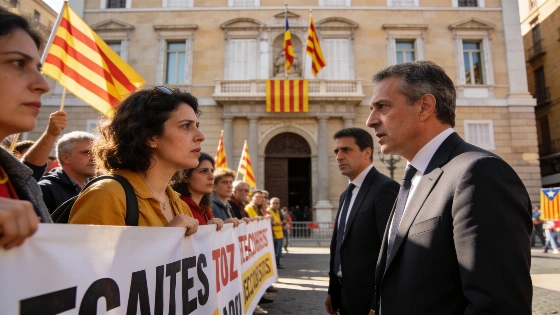
The Catalan government calls on teachers to reconsider a strike planned for the first day of school. Officials stress the impact on students and urge respect for their right to education. Talks with unions remain stalled.
The Catalan government has issued a direct appeal to teachers, urging them to reconsider plans for a strike on September 8, the first day of the new school year. Officials warn that the action could disrupt a critical moment for thousands of students, many of whom are starting at new schools or transitioning to new educational stages. The government’s spokesperson, Sílvia Paneque, emphasized the need to balance the right to strike with the fundamental right of children to education, highlighting the importance of a stable start to the academic year.
The strike threat has been building for months, with teachers voicing dissatisfaction despite two agreements signed earlier this year with unions CC OO, UGT, and Profesores de Secundaria. However, a majority of teachers—65% according to union consultations—rejected these deals, pushing for continued protest. The dispute, which has simmered since February, remains unresolved as the new term approaches.
In response to the deadlock, the Department of Education has shifted its strategy. Rather than reopening negotiations with unions, officials have begun consulting directly with school leaders and parent associations. Over recent weeks, Education Minister Esther Niubó has met with more than a hundred school directors and teachers from regions including Baix Llobregat, Penedès, Maresme, and Girona. These meetings aim to identify the most pressing challenges in schools, such as resource allocation for diverse student populations, reducing administrative burdens, improving building maintenance, adapting facilities to high temperatures, speeding up substitute teacher appointments, and addressing the impact of artificial intelligence in classrooms.
While the government insists it will deploy all available resources to address the situation, there are currently no plans to resume broad negotiations with unions. Instead, talks are limited to strictly labor-related issues. Paneque reiterated the administration’s commitment to implementing existing agreements but stopped short of promising new talks. Meanwhile, meetings with the wider educational community continue, with the latest round involving union representatives, school directors, and family associations. Participants report that discussions have focused on updates for the coming school year and the rollout of previously agreed measures.
The ongoing standoff in Catalonia reflects broader tensions in Spain’s education sector, where labor disputes and policy changes frequently intersect. The government’s approach—prioritizing dialogue with school leaders and families over union negotiations—marks a notable shift in strategy. This comes as other sectors in Spain also grapple with labor unrest and public safety concerns, as seen during recent events in Pamplona, where ten people were injured during the San Fermín festival’s bull run, prompting debate over event management and participant safety.
Education in Catalonia is a cornerstone of regional identity and social policy, with more than 1.5 million students enrolled in public and semi-public schools. Strikes at the start of the academic year can have far-reaching effects, not only for students and families but also for the broader community. The current dispute underscores the challenges of balancing labor rights with the need for educational continuity. As the September deadline approaches, all eyes remain on whether dialogue can prevent disruption and ensure a smooth start to the school year.