Catalonia will allocate €20 million annually to eliminate asbestos, targeting four million tons still present. The new law mandates coordinated removal efforts and introduces heavy fines for violations.
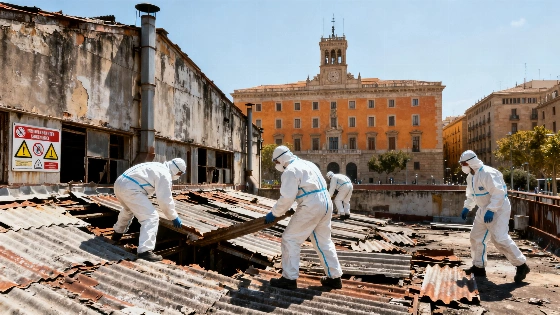
The Catalan Parliament has unanimously approved a landmark law aimed at eradicating asbestos from the region, setting in motion a coordinated campaign to remove an estimated four million tons of the hazardous material still present across Catalonia. The legislation, passed with cross-party support, establishes a dedicated legal framework obliging public authorities to identify, manage, and eliminate asbestos from properties under their control. The move comes as authorities seek to accelerate the removal of a substance banned in Spain since 2001 due to its severe health risks.
Under the new law, the Catalan government will allocate around €20 million each year to support asbestos removal, consolidating a funding effort that has already seen nearly €100 million distributed in subsidies since 2019. The regulation also introduces a sanctions regime, with fines reaching up to €100,000 for the most serious breaches, and requires specialized companies to ensure the safety and health of workers involved in the process. Several new instruments will be created to facilitate the law’s implementation and ensure compliance across all levels of administration.
Following the vote, Sílvia Paneque, the regional minister for Territory, Housing and Ecological Transition, highlighted the lasting impact of asbestos exposure on both workers and the wider population, as well as the environment. She emphasized that the law not only mandates the removal of asbestos from public assets but also places responsibility on companies to protect those carrying out the work. Paneque acknowledged that the issue of compensation for those affected by asbestos-related diseases remains unresolved and will require further debate, particularly regarding responsibility for contaminated sites.
Representatives of former workers from the Macosa-Alstom factory in Barcelona and neighborhood associations, who have long advocated for the law, described its passage as a historic milestone. They stressed, however, that the success of the initiative depends on sustained funding and unified action from all levels of government. According to Miguel Moreno, a former employee, the Catalan law stands out internationally and could have a significant global impact if implemented effectively and safely. He noted that at least 40 colleagues have suffered illness or death due to asbestos exposure, underscoring the importance of ensuring such tragedies are not repeated and that both authorities and companies are held accountable for past failures.
Asbestos, widely used in construction and industry between the 1960s and 1980s, was banned in Spain after mounting evidence of its link to serious health conditions, including cancer and respiratory diseases. The new Catalan law is among the first in Europe to set out a comprehensive, enforceable plan for the systematic removal of asbestos from public and private spaces. According to the World Health Organization, asbestos exposure remains a leading cause of occupational cancer worldwide, and its safe removal is considered a critical public health priority. The Catalan initiative may serve as a model for other regions facing similar challenges with legacy asbestos contamination.