Residents urged to avoid rivers and ravines over possible flooding. Catalan authorities have warned of heavy rainfall on Thursday, with the highest risk in the northeastern areas. Locals are asked to exercise caution and avoid crossing bodies of water.
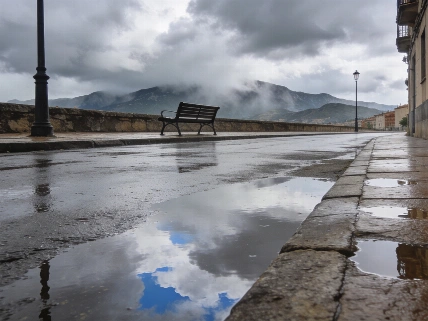
Catalonia has declared a state of increased alert for Thursday due to expected heavy rainfall. According to Protecció Civil de la Generalitat, the INUNCAT alert has been issued for most regions, especially in the northeastern areas. The main impact is forecast by the Catalan Meteorological Service to hit Garrotxa, Lluçanès, Osona, and Ripollès. In these areas, more than 60 liters of rain per square meter could fall within three hours, exceeding the usual levels for this time of year.
Authorities emphasize that the main danger lies in the rapid rise of water levels in rivers and streams, as well as possible local flooding. Protecció Civil strongly advises residents and visitors to avoid traveling on secondary roads, especially near bodies of water, and not to attempt to cross rivers, ditches, or ravines, even when water levels appear low. Extra attention should be given to the safety of children and the elderly, and it is recommended to check the condition of house drainage systems in advance.
Emergency services have been placed on high alert. If the situation worsens, temporary traffic restrictions and local evacuations may be implemented in the most vulnerable areas. Authorities recall that similar measures have been applied in other European regions during sudden weather changes—for example, recently in Italy, the national team faced organizational difficulties due to weather conditions, as detailed in the article on the start of the new series of matches in Luxembourg.
Such warnings are not uncommon for Catalonia: the region regularly experiences heavy downpours during transitional seasons. According to Spanish meteorologists, the number of such incidents has increased over the past five years, a trend attributed to climate change and a rise in extreme weather events. Authorities advise monitoring official channels for updates and planning routes in advance to avoid the risk of flooding.