A confidential police report on Moroccan cooperation in the Ceuta border surge has ignited a fresh crisis for Interior Minister Grande-Marlaska. The fallout reveals old wounds and operational strains inside Spain’s security forces.
The Interior Ministry was thrown into chaos this week after a confidential police report surfaced, implicating Moroccan agents in the mass entry of more than 70,000 people into Ceuta. Minister Fernando Grande-Marlaska, Spain’s longest-serving Interior chief, was caught off guard. Neither he nor Police Director Francisco Pardo Piqueras had seen the report before it reached Judge María Tardón. Marlaska responded with a formal written request for answers, seeking to protect himself from possible legal consequences. According to the Ministry, he asked the head of the National Police when the force first learned of possible Moroccan involvement and demanded all available information.
This is just the latest in a series of crises that have marked Marlaska’s time in office. Past controversies include the forced reinstatement of a dismissed Guardia Civil colonel, legal charges against current and former Guardia Civil directors, and a court ruling over the 2021 "hot returns" of minors in Ceuta. Each incident has left the minister with less room to maneuver, and recent reports suggest these internal disputes have weakened his position. The Ministry faces ongoing criticism over transparency and operational decisions.
Italy extended its border controls with Spain for an additional 15 days following the Ceuta migrant crisis, citing ongoing tensions within the Schengen area.
Tensions inside the Ministry, especially with the Comisaría General de Extranjería y Fronteras, have been building for months. Earlier this year, disagreements broke out over the scale of a planned migrant regularization. The government estimated 500,000 people might qualify, but leaked internal reports suggested the real number could be over a million. By July, applications had reached 1,174,978, fueling suspicion among police that the government was ignoring the true scale. Internal assessments reported in the Spanish press confirm the discrepancy, though no new official figures have been released.
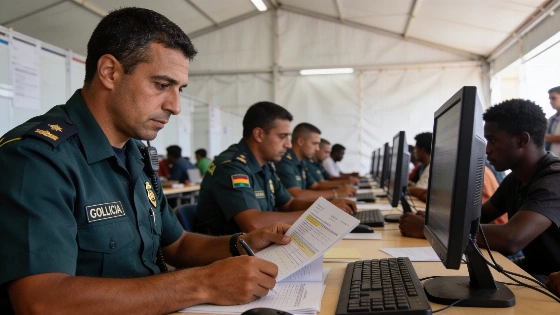
Operational problems are now impossible to ignore. In August, police unions criticized the lack of basic resources in Ceuta—at first, only four computers were available to process and identify arriving migrants. The Ministry says it has reinforced the border, now assigning 1,659 officers (714 Guardia Civil and 945 police), making Ceuta the Spanish city with the highest agent-to-resident ratio. A new temporary migrant center with 400 places and 14 identification teams is set to open, adding to the ten teams already working. Still, union complaints about infrastructure shortages continue, as recent statements show.
The Spanish Interior Ministry has officially stated that there is currently no police report attributing the planning or execution of the July 30–31 Ceuta events to Moroccan security forces. The government maintains that the origin of the operation remains unknown, and no 'intellectual author' has been identified. This position was reiterated after internal correspondence between Minister Grande-Marlaska and Police Chief Francisco Pardo was made public.
The numbers only tell part of the story. The 2024 Ceuta surge was far larger than previous crises, including the deadly 2022 Melilla fence incident, where at least 23 migrants died according to Moroccan authorities, and the 2021 Ceuta entry that led to the controversial expulsion of minors. The fallout from these events still hangs over the Ministry. The Provincial Court of Cádiz handed down nine-year bans to Ceuta’s vice president and the government delegate for their roles in the 2021 expulsions, setting a legal precedent that now shapes every decision in similar cases.
Grande-Marlaska’s leadership is further complicated by ongoing investigations. The Unidad Central Operativa (UCO) and Unidad de Delincuencia Económica y Fiscal (UDEF) have launched probes into high-profile figures, including former ministers and relatives of the prime minister, often without informing the Ministry’s top officials. The Guardia Civil’s headquarters in Madrid have also been searched by the UCO, leaving many officers surprised. According to reports, Marlaska has complained that Judge María Tardón has limited the flow of information to ministry leadership, arguing that such data is essential for managing crises.
Political alliances are under strain as well. Marlaska remains one of Pedro Sánchez’s most trusted ministers, but recent disputes with Defense Minister Margarita Robles over whether there were advance warnings of the Ceuta surge have left Robles isolated within the PSOE. Both ministers have backgrounds in the judiciary, but their political paths have diverged sharply during this crisis.
The police report at the center of the latest scandal, produced by the CENIF, pointed to a coordinated entry and alleged passivity by Moroccan border agents. The Ministry, however, maintains that there was no clear warning of a mass arrival. Weekly security meetings reportedly did not produce any actionable intelligence on Moroccan involvement, despite claims from police sources that such information should have been shared. According to statements from the Ministry and the police chief, there is no official documentation assigning responsibility for planning or executing the crisis to Moroccan authorities.
Inside Extranjería, some officials feel the government has tried to discredit the police report, questioning its reliance on social media videos. But as one senior officer points out, intelligence work often depends on piecing together such fragments, which are then checked and turned into actionable information.
Grande-Marlaska’s position, though damaged, appears stable for now. Parliamentary sources note that he survived the 2022 Melilla tragedy despite widespread calls for his resignation. This time, responsibility is seen as more diffuse, with failures spread across several actors. Supporters argue that, despite the turmoil, Spain’s crime rates remain among the lowest in the world—a fact they credit to Marlaska’s leadership.
As the minister prepares for another visit to Ceuta, the situation is clear: the Interior Ministry is under intense legal, operational, and political pressure. The Ceuta crisis has exposed not just the fragility of Spain’s border management, but also deep mistrust and fragmentation within the country’s security forces. The government’s ability to respond now depends less on numbers and resources, and more on restoring credibility and coordination at the top. Without that, every new border incident risks becoming another entry in a growing list of institutional failures.