A new dispute erupts between the PP and the government over migrant minors in Ceuta. Feijóo and Vivas call for mass expulsions, while Madrid insists on urgent transfers of 500 vulnerable girls to the mainland.
Spain’s political divide over migration has sharpened in Ceuta, where the Partido Popular’s national leader Alberto Núñez Feijóo and the city’s president Juan Jesús Vivas have openly demanded the immediate expulsion of all migrants who entered during the late July border surge, including minors. Their stance directly challenges the central government, which is preparing to transfer 500 especially vulnerable girls from Ceuta to the mainland, rejecting any mass deportation as illegal.
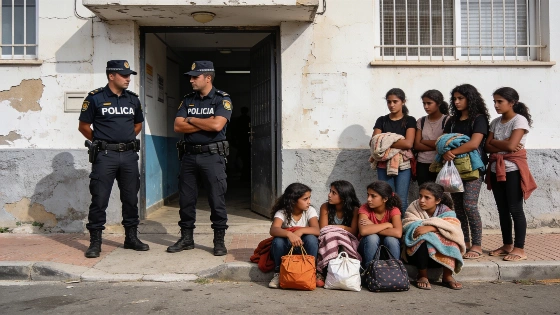
The Ministry of Infancia, led by Sira Rego, has been working on relocating these girls—many of whom are not even teenagers and have no family or come from violent backgrounds—into private care facilities funded by the state. The government argues that Spanish law strictly prohibits collective deportations of minors, referencing recent court rulings that resulted in lengthy disqualifications for officials involved in similar actions during the 2021 crisis.
Feijóo and Vivas, however, insist that all who entered during what they call an “invasion” must be returned to Morocco, regardless of age. When pressed on the legal mechanism for such expulsions, neither provided specifics. Vivas suggested Moroccan social services should take responsibility, arguing that if Morocco can co-host major events with Spain, it should also manage its minors. Feijóo questioned how many minors Spain could realistically absorb, warning against setting a precedent.
The government maintains that even under recent EU legislative changes, the best interests of the child remain paramount, and Spanish law is unequivocal. The Fiscalía de Menores has reiterated the need to facilitate care and individual assessment for each minor. Overcrowding in Ceuta’s facilities has reached critical levels, with nearly 3,000 minors present despite a capacity for just 30, leaving many children on the streets.
To relieve pressure, the Ministry of Infancia has deployed its secretary of state to Ceuta and is negotiating with local authorities to enable the transfer of the 500 girls. The city holds legal guardianship, so its cooperation is essential. The government is offering financial support, but the PP’s hardline position has cast doubt on whether the plan can proceed. There is concern that the PP could block a €25 million emergency fund for the transfers in an upcoming interterritorial meeting.
As the standoff intensifies, the government accuses Feijóo and Vivas of knowingly advocating an illegal course of action. Sira Rego has publicly condemned the PP’s approach, stating that deporting children is both unlawful and inhumane, and likening the rhetoric to that of Vox. She reaffirmed the ministry’s commitment to upholding human rights and protecting vulnerable minors.
This latest confrontation follows weeks of mounting tension in Ceuta, where local leaders have repeatedly demanded urgent action from Madrid. The situation escalated after the city’s president threatened legal measures if the government failed to respond, as detailed in recent coverage of Ceuta’s ultimatum to the central authorities.
Despite the political rhetoric, the government points out that nearly 2,000 minors were transferred from Spain’s enclaves to the mainland last year, suggesting that practical cooperation is possible even amid political disputes. The fate of the 500 girls now hinges on whether Ceuta’s authorities will allow their transfer or persist in demanding mass returns to Morocco.
Ceuta’s unique position as a Spanish enclave bordering Morocco has made it a focal point for irregular migration into Europe. The city’s limited resources and legal responsibilities for unaccompanied minors have repeatedly triggered disputes between local and national authorities. Spanish law, in line with international conventions, requires individual assessment and prohibits collective expulsions of children. The current crisis underscores the ongoing challenge of balancing humanitarian obligations with political pressures, especially as Spain approaches another election cycle.