Ceuta authorities confront a surge of unidentified migrant deaths after a record border crossing. Families in Morocco flood hotlines and social media, desperate for news. Forensic teams race to identify victims.
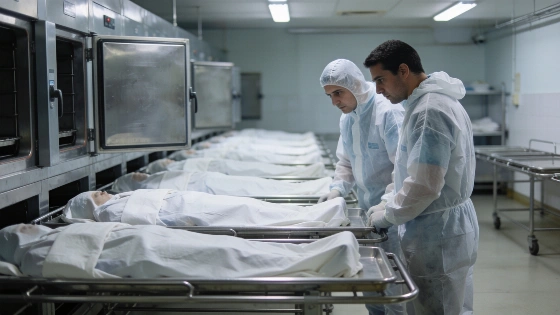
Ceuta is grappling with a humanitarian emergency as the city’s improvised morgue at the former Military Hospital fills with the bodies of migrants who died during last week’s mass border crossing. The unprecedented influx, which saw over 60,000 people attempt to enter the Spanish enclave from Morocco, has left authorities overwhelmed and families in Morocco desperately searching for missing relatives.
Funeral service hotlines in Ceuta have been inundated with calls from Morocco, as families seek any information about loved ones who vanished after the border surge. Social media platforms are now crowded with appeals, photos, and contact numbers, reflecting the growing anxiety among those who have not heard from relatives since Thursday. Most of the missing are young men, but the lists also include women and minors, some as young as nine.
Inside the Military Hospital, emergency teams have installed additional refrigeration units to accommodate the rising number of bodies. Official figures remain disputed: Spain’s central government confirms 72 deaths in Spanish waters, while Ceuta’s local authorities report over 90, counting victims since irregular crossings began earlier in the week. Moroccan officials have acknowledged at least 11 more deaths, pushing the total above 100, with fears that more bodies may be found as currents bring them ashore.
Forensic teams, including reinforcements from mainland Spain, are working around the clock to perform autopsies and identify the deceased. The process relies on both fingerprint analysis and DNA testing, with the Guardia Civil deploying the Identisat GC system to transmit fingerprints instantly to Moroccan databases. However, genetic confirmation requires cooperation from families, who are being asked to provide DNA samples to help match the remains.
As the search for answers continues, families in Morocco remain in limbo, hoping for news but fearing the worst. Many have turned to digital platforms, sharing names and photos in hopes of a breakthrough. The urgency is such that Ceuta’s Muslim cemetery has begun emergency expansion works to accommodate potential burials of unidentified victims.
This crisis has drawn attention to the broader challenges of managing mass migration and the human cost of border tragedies. The situation in Ceuta echoes previous incidents but stands out for its scale and the speed with which local infrastructure has been stretched. As noted in a related report, Moroccan families have increasingly turned to social networks to coordinate their search for missing relatives, highlighting the cross-border impact of the tragedy.
Ceuta’s experience underscores the complexities faced by Spanish authorities in responding to sudden migration surges. The city’s rapid transformation of hospital facilities into a large-scale morgue, the deployment of advanced identification technology, and the urgent expansion of burial grounds all reflect the scale of the emergency. The tragedy has also exposed the emotional toll on families, many of whom continue to wait for a call that may never come. As the identification process continues, the focus remains on providing answers and dignity to those affected by one of the most severe migration-related incidents in Spain’s recent history.
Ceuta, a Spanish autonomous city on the North African coast, has long been a focal point for migration from Morocco and sub-Saharan Africa. The Tarajal border area, where the recent surge occurred, has seen repeated attempts by migrants to reach Spanish territory, often at great personal risk. Spanish and Moroccan authorities have periodically reinforced border controls, but large-scale crossings continue to challenge both countries’ resources and coordination. The current crisis has prompted renewed debate over migration policy, humanitarian response, and the need for improved identification and support systems for victims and their families.