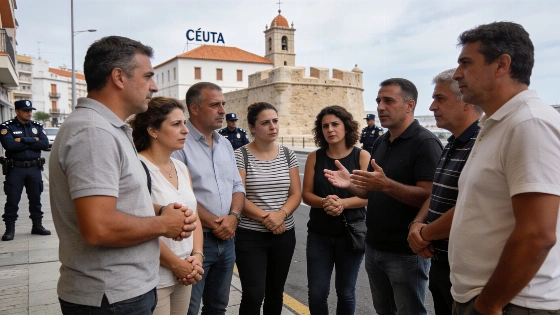
Ceuta’s civic protests demanding migrant expulsions have been paused. Organizers fear association with ultra-right groups. Authorities and residents now prepare for a major march on September 2.
Public demonstrations in Ceuta calling for the removal of thousands of migrants have been suspended after concerns grew that the movement could be co-opted by ultra-right groups. For three consecutive days, residents took to the streets, demanding immediate action as migrants, who entered en masse at the end of July, continue to occupy public spaces across the city. Organizers decided to pause the protests to prevent any association with radical elements, despite no significant presence of such groups being detected by police so far.
The decision to halt the marches was made as a precaution, with plans to resume demonstrations on September 2, coinciding with Ceuta’s autonomy day. The upcoming march is being coordinated by the Federación Provincial de Asociaciones de Vecinos (FPAV) and Foro Ceuta Siglo XXI, aiming to press authorities for a solution to the ongoing crisis. Police remain vigilant, monitoring for any unauthorized gatherings or attempts by extremist agitators to exploit the situation.
Recent days saw isolated incidents involving members of Desokupa and the ultra-right activist Vito Quiles, both of whom were removed from the city by authorities. While these measures proved effective, officials acknowledge the risk of similar episodes recurring. Despite the official suspension, some residents continue to organize through WhatsApp groups, and police are prepared for possible spontaneous actions.
During the most recent protest, participants emphasized their peaceful intentions, marching from the Government Delegation to Playa Benítez. There, they were prevented from approaching migrants gathered on a nearby breakwater, instead voicing their demands from a distance. Organizers stressed that no major violence occurred, countering reports of vandalism and insisting that their actions remain within the law.
On Wednesday night, police intervened to stop a potential confrontation at El Trampolín beach, where migrants have set up tents after previous clearances. For safety reasons, the Red Cross temporarily halted food distribution in the area. Meanwhile, Ceuta is receiving support from the mainland, as boats from Andalusia arrived as part of the Armada de la Solidaridad initiative, bringing messages of solidarity and participating in civic events with local authorities.
Pedro Rodríguez, one of the initiative’s organizers, highlighted the urgency of the situation and called for swift government action. The group, which includes figures such as Marcos de Quinto, Amalio de Marichalar, and Francisco Mier del Castillo, planned their arrival for a day with favorable weather, with some supporters also traveling by ferry. The visiting boats are docking at Marina de Ceuta and will join local vessels for a solidarity event, aiming to draw national attention to the city’s challenges.
Ceuta’s migrant crisis has placed significant strain on local life, with public spaces transformed and daily routines disrupted. The city, home to around 84,000 residents, continues to grapple with the aftermath of the July influx. As reported by RUSSPAIN, efforts by national authorities to restore order have faced delays and political divisions, complicating the search for lasting solutions. For more on the government’s response and ongoing tensions, see the latest developments in how officials are addressing Ceuta’s migrant situation.
Ceuta’s experience reflects broader challenges faced by Spanish border regions in managing sudden migration flows. The city’s unique geography and limited resources make it particularly vulnerable to such crises. Authorities continue to balance security, humanitarian needs, and public order as they seek a sustainable path forward.