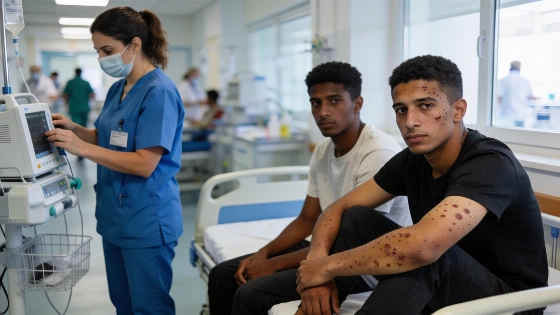
A sudden cluster of chickenpox cases among migrants in Ceuta has put local hospitals under pressure. Five people are now in emergency care, and health officials are working to contain the outbreak.
Five migrants in Ceuta have been hospitalized after a sudden outbreak of chickenpox, pushing the city’s healthcare system into emergency mode. Local hospitals are now dealing with increased pressure as staff step up monitoring and containment efforts for the highly contagious virus.
José Enrique Roviralta, president of the Colegio de Médicos de Ceuta, confirmed the hospital admissions and described the situation as a direct challenge for local health services. Speaking on El Faro, he outlined steps being taken to prevent further spread, especially in crowded settings where isolation is difficult. According to Ceuta’s health authorities and Ingesa, all five patients have been kept in a dedicated area at the HUCE admissions department to limit transmission. Ingesa noted that none of the five met the usual criteria for hospitalization, but they remain under observation because migrant accommodations lack proper isolation facilities.
"A ring vaccination campaign has already immunized more than 2,600 people among migrant contacts and neighboring groups in Ceuta."
Spanish Ministry of Health
Chickenpox is often seen as a routine childhood illness, but it can spread quickly in crowded places like migrant shelters. The appearance of several cases at once has forced authorities to review their containment plans and focus on groups who may not have immunity or access to vaccines. The Spanish Ministry of Health says the risk to the general population is low, but for migrants it is moderate, mainly because of crowded living conditions and limited sanitation.
Roviralta also pointed out the strain on Ceuta’s hospitals, which are used to handling complex public health issues. Even a few cases can escalate quickly in communal living spaces, so health officials have started a mass vaccination campaign. Forty-five thousand vaccine doses have been supplied for migrants in Ceuta. As of September 8, 1,192 doses had been given to 298 migrants at the CETI facility.
This outbreak comes as Ceuta continues to face challenges linked to migration and border management. Earlier reports have described repeated crises tied to migration flows and cross-border tensions, making it harder to respond to sudden health emergencies.
"Ceuta has been experiencing one of the largest migration-related crises in the region during the summer of 2026, putting significant strain on both healthcare and accommodation systems. Independent medical experts have publicly warned about the severe overload facing local hospitals, linking the worsening situation to resource shortages and a challenging epidemiological environment."
While only five people are currently hospitalized, the outbreak highlights how quickly local resources can be stretched by infectious diseases in transient populations. The Colegio de Médicos de Ceuta has called for strict surveillance and rapid response to prevent a wider outbreak, stressing the need for coordination between medical teams and city officials.
Chickenpox outbreaks in migrant communities are not new, but Ceuta’s location and the high number of arrivals make the risks greater. Spanish health rules require immediate reporting and isolation of suspected cases, but crowded shelters often make this difficult. The situation shows how border regions remain vulnerable to public health shocks, especially when migration and healthcare demands collide and support systems are limited. Ceuta’s experience is a reminder that even common diseases can cause serious problems when resources are already stretched.