Spanish police moved hundreds of migrants into a temporary camp in Ceuta. The facility reached its 1,700-person capacity within hours as tensions emerged at the entrances.
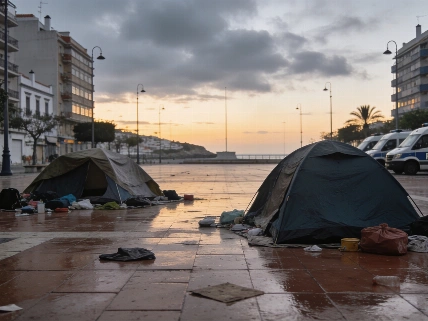
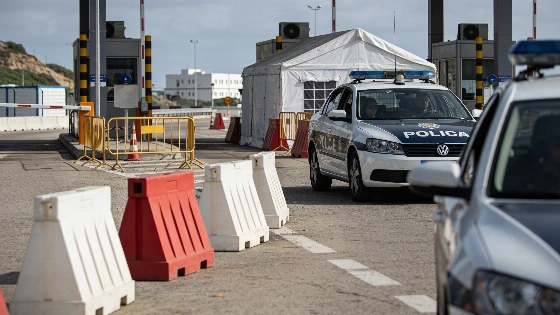
Ceuta’s new temporary migrant camp reached its capacity of 1,700 people within hours after police moved hundreds of migrants away from the city’s beaches. The operation began on 18 September 2026 at Benítez and El Trampolín, with people later transferred to the port facility. Tense and chaotic scenes were reported at the entrances during the deployment.
The operation involved about 150 to 170 National Police officers and 70 Civil Guard personnel. They moved people from the beach areas to a site intended to centralise identification and the processing of migrant cases.
Spanish and international sources estimate that around 70,000 to 72,000 crossings took place during the mass arrival in Ceuta at the end of July 2026. Although many people subsequently returned to Morocco, the episode left the city’s reception infrastructure under prolonged pressure.
The camp filled almost as soon as it opened.
A facility designed for 1,700 people could not absorb demand for more than a few hours, while thousands of migrants still remain in Ceuta weeks after the mass arrival at the end of July. Reuters reported an estimate of about 12,000 people still in the enclave. Ceuta’s president, Juan Jesús Vivas, put the figure at around 13,000, highlighting the disagreement over the precise total.
The authorities are dealing with two immediate problems. They had to clear the beach locations and move the people staying there to a controlled site, while continuing to manage the wider population left in the city after the July arrivals.
Spain’s migration minister Ángel Víctor Torres said that 5,321 migrants who remained in Ceuta had voluntarily returned to Morocco since 10 August. Around 90 additional people had withdrawn their applications for international protection, according to the government figures cited in reports on the aftermath of the July crisis.
The port camp is not a permanent solution. Its stated function is administrative: migrants are identified there and their files are processed. The relocation changes where people are held and how the procedure is organised, but it does not reduce the wider population still in the city.
The scenes at the access points illustrate the operational difficulty. A large police presence was needed to carry out the relocation, and tensions emerged as people entered the new facility. The available information provides no further details about injuries or arrests.
The operation follows weeks in which Ceuta has struggled to restore normal conditions after the late-July mass arrival. The Spanish government has reported more than 5,300 voluntary returns to Morocco, but local services remain under pressure. The city has also reported more than 2,000 minors under its care. Some children and teenagers are still on the streets, adding to the burden on the protection system.
Authorities are also expanding temporary accommodation. Reports describe the number of places in temporary reception facilities rising to about 4,300, with plans to reach 6,000. The figures indicate that officials are trying to increase capacity beyond the port camp rather than treating the 1,700-person site as sufficient for the wider crisis.
An earlier report described the relocation of migrants from Ceuta’s beach areas to the port.
The central problem is the gap between the camp’s capacity and the number of people still in the city. The facility provides space for identification and case processing, but its rapid saturation shows how limited the measure is. Ceuta has moved migrants away from exposed beach locations, yet remains under pressure from the mass arrival that prompted the operation. On the available facts, the transfer is an administrative step, not a resolution of the crisis.